Remembrance – Alfred Thompson

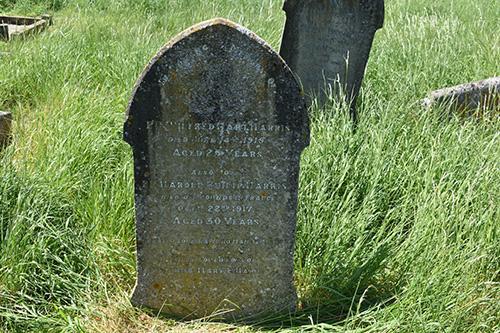
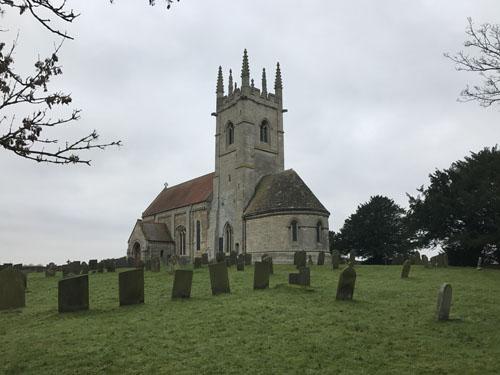
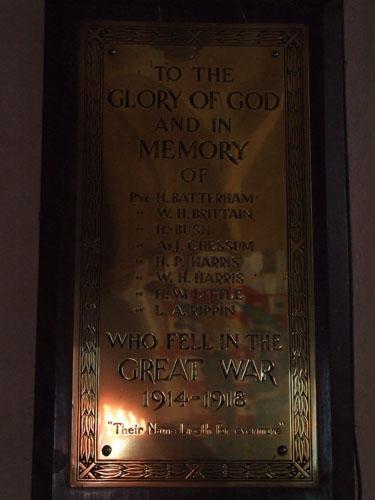
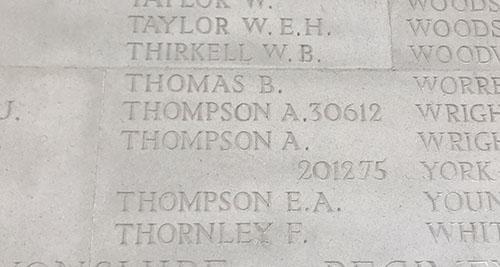
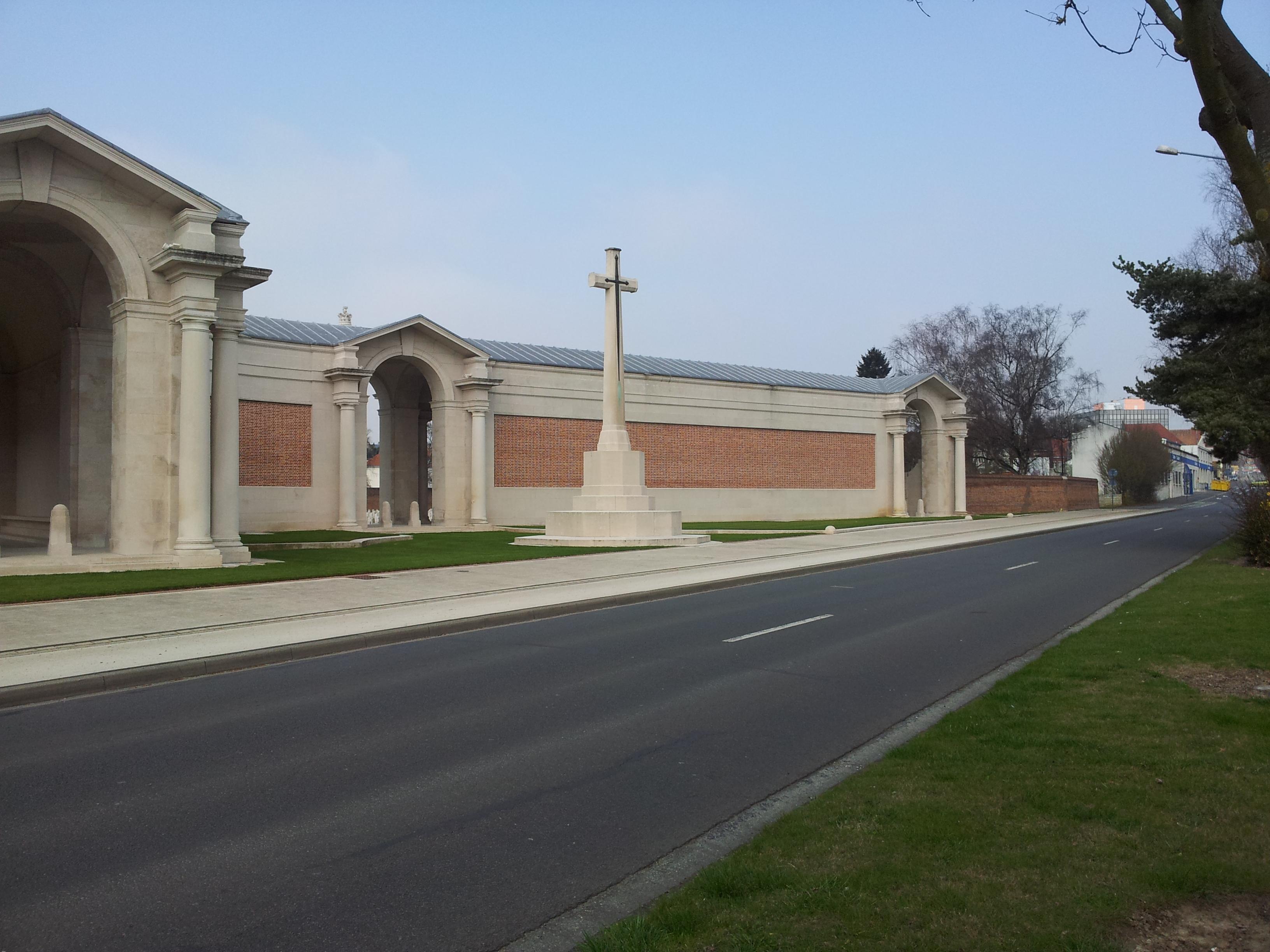
Our second remembrance of today is Alfred Thompson who was killed this day, 8th June 1917, serving with the 4th Battalion Lincolnshire Regiment, commemorated on the Bourne and Arras memorials. One of two 4th Battalion men from the Bourne area to fall on this day

Alfred Thompson was born late in 1897 in Little Horton, near Bradford, to George Thompson a railway worker and his wife Annie Susannah Osbourne, both born in Little Horton. George and Annie were married in 1891 in St Peter’s Bradford and were blessed with their first of three children in 1895.
• James Thompson, 1895, Little Horton
• Ellen Thompson, 1896, Little Horton
• Alfred Thompson, 1897, Little Horton

In 1901 the young family are living in Horton where George was working as a carter for the railway and Susannah (Annie Susannah) as a Worsted Spinner.

10 years later Annie (Annie Susannah), Ellen and Alfred can be found living with her parents in Darton Street Bradford. Annie and both children are working in a Worsted Spinning factory and Alfred was employed as a Doffer. A Doffer took the full bobbins off the spinning machines and replaced them with empty ones. George has not been found on the 1911 census to date although Annie lists that she has been married for 18 years and so it is to be assumed that George is still alive.

In September 1913 Annie Susannah, referred to variously as Annie or Susannah Hubbard in official records, remarried to Charles Hubbard in Deeping St Nicholas Fen and in 1919 was living in Tongue End near Bourne Lincolnshire.

As Alfred’s army records have not been found, assumed to have been destroyed in the London Blitz warehouse fire, we can only trace his movements through the surviving records and so some of the dates and information may be approximate.

Alfred enlisted into the 4th Battalion Lincolnshire Regiment in Spalding around May or June 1915, although the exact date is unknown. The medal rolls show that he has three separate entries for Battalions served, first the 4th Lincs (3941), then the 5th Lincs (3941) and finally the 4th Lincs again (201275).

Alfred enlisted originally into the 4th Battalion and after training was posted to France to join his battalion on 10th December 1915. At that time the Battalion were in Thiennes and on the 22nd December 1915 an entry in the Battalion Diary reports that “106 Reinforcements arrived from the 3/4th Battalion at 2.30pm, kit inspection held on arrival”. This would be Alfred’s first meeting with his Battalion ion the field.

The prospect of a long winter in the trenches was dispelled during the month of January by orders to the 46th Division to embark for Egypt at an early date, and on the 7th January both the 1/4th and 1/5th Battalions left Marseilles in T.S.S. “ Anchises.”
The vessel reached Alexandria on the 13th January and they left by rail for El Shalufa, two miles south of the Bitter Lakes, where, after detraining, they crossed the Suez Canal by ferry, and bivouacked to the east of it.
By day the desert to the east was patrolled by Indian Lancers, but by night each battalion, in turn, furnished an outpost line round the camp. The days were very hot, and the nights cold; any wind that blew carried clouds of dust; nevertheless a fortnight passed very pleasantly.

This peaceful existence came to an end when the 46th Division received sudden orders to return to France, and on the 4th February the 4th Battalion embarked at Alexandria on the “ Minnewaska,” and the 5th on the “ Megantic,” disembarking in Marseilles on the 9th February 1916.
The evacuation of the Gallipoli Peninsula set free a large number of troops for service in Egypt and the 46th Division was in consequence ordered back to France.

The Battalion then spend time in Ailly Le Haute Clocher training until the end of February and then on to Doullens, it would not be until the 11th of March 1916 that the Battalion would be back in trenches since the 2nd December and Alfred’s first taste of the trenches. Later it in the month was a movement for the Battalion and into trenches around Fonquevillers for June.

Eventually they would be given orders for a Zero Time of 7-30am for a planned attack on the 1st July, the first day of the Battle of the Somme. Their orders were to “take over a trench line south of the Gommecourt Road on the night of 27th/28th” This was to be their sector for the big push and they were to attack Gommecourt although the 4th battalion was not in the front wave.
The Battalion Diary does not give much detail for the Battle of the Somme and they remained in the trenches until the 8th July when they were relived and dropped back to Bienvillers to provide working parties.

Alfred’s next mention in any documents is on the 10th July 1916 when we find A Thompson of B Company 1/4th Lincs being admitted to the 2nd General Hospital at Le Havre with Suppuration of the Lymph Glands, axilla (Axillary Lymph Nodes). After two days in the General Hospital he was transferred to H.S. Carisbrook Castle and returned to England.

Usually after convalescence, if fully fighting fit, a man would be pushed back to the front but depending upon the level of fitness obtained it was possible that they were assigned to a Home Service Unit for duties such as defending ammunitions factories, military facilities or docks until the point when they were declared fit for a return to the Front.
It was very usual for a man to be sent back to France and then at the base camp be assigned or posted to a Battalion or Regiment that needed men as reinforcements the most urgently.

We have no records to say what happened in Alfred’s case although his medal roles show that he was posted to the 5th Battalion (still with regimental number 3941) and then back to the 4th Battalion (regimental number 201275) at some point in his war story. All we can say for certain is that when he was killed he was back with the 4th Battalion.

The following shows the movements of the 4th Battalion in the month before Arthur Thompson’s death and are taken from the 4th Battalion diaries. This is the most accurate way of seeing Arthur’s movements over the last days of his life.

May 28th 1917 – Bovigny Boyeffles
The 138th Brigade (Lincolns and Leicesters) was withdrawn from the line, the 4th Battalion Lincolns taking up billets at Bouvigny Boyeffles. There it was that the striking news reached them. The Battalion had been honoured by the command to take part in an extensive enterprise on a 2000 yards front North West., West and South West of Lens. The 138th Infantry Brigade being further represented by the 5th Leicesters. Our Battalion was thrilled with the news and one heard repeatedly the remark “Our first real chance since Hohenzollern”

29th May – June 3rd 1917 – Bouvigny Boyeffles
Training began in earnest. A replica to scale of the ground over which the attack would be launched was planned and laid out at Marqueffles Farm a mile or so South East of Bouvigny. From “assembly trenches” one’s eye ranged forward to persuasive notice boards announcing in bold letters “Railway Cutting” and “Bridge Destroyed”, on past crinoline wire entanglements to objective trenches, first and second line strongholds of the enemy, strangely quiescent, and labelled according to their map designations, Ahead, Agnes, Alcove, Archie, Alice, Amy, Admiral and Annie such were the communications and trenches guarding hill 65. These it was, the Battalion was to storm.
Daily to the practice ground went the Battalion joined by D Company (captain Wakeley) of the 4th Leicesters – our “Moppers-up” elect. The artillery and machine gun barrage to cover our advance and keep the impetuous in check was indicated by flagmen and thus the progress of the attacking waves was directed.
On six successive days the course was covered. Forward at Zero to the “Cutting”, half right form to face the objective trenches, B Company then edging away to the left, half D Company inclining to the right and joining up with C Company on that flank. “Moppers-up” in position behind the first wave – Gradually the movement attained a clock work precision and every man wac capable of pushing his path blindfold.
On the seventh day Dress rehersal. General Holland 1st Corps Commander, General W Thwaites 46th Division G.O.C, Colonel Thorpe Commanding 138th Infantry Brigade (Whose presence and responsibility for the tactical dispositions inspired the confidence of all ranks), and their staffs surveyed the final training bout. Fully equipped with arms, spades, picks, bombs, lights and flares the “Attack” began. The repeated “Toot toot” of a “claxton” from a contact plane aloft completed the programme. Flares were lighted to announce the progress of the advance.

4th June 1917
The higher commands were satisfied. It only remained to form up and receive the confident good wishes of the staff, and , with a full day’s rest on the morrow, all were ready and impatient for the real thing.

5th June 1917
A day of well-earned rest.

6th June 1917
On the morning of the June 6th the Commanding Officer announced to the Battalion, at a special parade, that plans had been altered and instead of the premeditated operation the attack was to be a series of destructive raids. The same evening the Battalion marched away from Bouvigny and billeted in the ruins of Cite Des Bureaux, Lievin.

7th June 1917 – Cite Des Bureaux, Lievin

8th June 1917 – Cite Des Riaumont
The 8th June arrived – a perfect summer day. The afternoon was spent in moving up to the cellars in Cite De Riaumont adjoining the assembly trenches. All Companies reached these without mishap except D Company which lost the services of 2nd Lieut E A Dennis (13 Platoon) wounded by one of the enemy’s shells that were already finding our starting zone.
Time crept on towards zero. “Sausages” enlivened the waiting period as they crashed on and around the ruins which sheltered us. Well before 8pm “C”, “D” and “B” Companies were in position in their respective assembly trenches. In some way the enemy seems to have known our timed movements and intentions. The intensity of the barrage to which the assembled troops was subjected was and experience no one on the spot is likely to forget.
“D” Company fared worst as, while the bombardment of their sector was accurate to a degree, on the flank sectors it was sufficiently plus to miss the assembled platoons.

At Zero – 3 Captain R D Ellis commanding D Company and Captain Wakeley O.C. 4th Leicesters “Mopping-Up” Company were caught by the same shell as they came into position in the rear trench. Both were killed outright.

At 8:30pm the synchronised signal to advance was given. C Company on the right got away without mishap, two platoons South of Cutting and one under 2nd Lieut A B Hardy, who was wounded almost immediately, to bring covering fire from the Cutting. D Company in the centre as soon as they “Jumped Off”, by ranks and increased intervals to lessen gaps, showed the effects of their experience in the assembly trenches. B Company on the left were a joy to behold as they went over the line.
The Cutting was reached.
D Company by this time reduced by half its number and B company, already caught by the enemy’s guns, scaled the further slope of the Cutting together and advanced to their objectives. Captain E.J.S. Maples commanding B Company was at this juncture struck in the forearm by an ugly piece of shell case but continued the advance with his men. Owing to the position of their line being oblique to the “A” Barrage and the stokes mortars which were to deal with this sector being put out of action, the enemy had time to man his trenches from his dug-outs. C Company with the platoon of the 5th Leicester’s on their right were completely held up. When the first waves of “D” & “B” Companies reached the first German trench his barrage was already on it, and a temporary check occurred until the reinforcing waves came up. Owing to this check we were unable to keep up with our barrage, and the enemy had lined his second trench before our arrival there. Hand to hand fighting ensued and after a further advance of D Company to the South and B Company to the East the odds became overwhelming. We fell back first to Ahead and then the Cutting. Meantime Sergeant Quinton E, with his platoon got further afield than the rest. It was during this stage of the fight that B Company lost 2nd Lieut R T Thomson and 2nd Lieut H C Chase, both of whom died gloriously, the former a result of a second wound and the latter from a shell burst. Sergeant E Quinton, B Company, and his platoon after several attempts to re-join their comrades, in which they repeatedly bumped up against strong parties of the enemy, finally succeeded in rushing an opposition post and fighting their way back to our line, after having been in the German lines for four hours; a triumph of leadership on the part of Sergeant E Quinton. The demolished bridge on the right flank was at once mamed, and under 2nd Liuet W F Maskell (D Company 14 Platoon) kept the enemy at respectful distance, sterling work being done by the Lewis gun. The front of the Cutting was lines by the remnant of B and D Companies under Captain E J S Maples and was held until orders for withdrawal to Assembly Trenches was received, A Company having manned our original line of posts. It was not till then that Captain E J S Maples withdrew from the fight and had his arm properly dressed, some 3 hours after he was wounded.

The greatest assistance had been rendered throughout by the 138th Machine Gun Company under Major A A Ellwood, a 4th Lincoln officer and particularly by a detachment of two of his guns under Lieut Stentiford, manned by 4th Lincolns.

The attack on the right hand had gone well, A Company 4th Leicesters having reached their objectives and sent back 27 prisoners.

9th June 1917 – Chateau (Leivin)
The day was spent reorganising Companies. Evacuation of wounded continues and by night search parties went out, discovering two more wounded men and a number of dead, who before had been reckoned as missing. On the night of the 9th we were relieved by the 5th Lincolns and moved to billets in Aix Noulette. Here we rested that night and also the following day.

10th June 1917 – Aix Noulette
In the afternoon we were honoured by a visit of the G.O.C the Battalion paraded in clean fatigue and were addressed by the General. He expressed himself well pleased with the excellent fighting qualities our men showed, and with the number of Boches they killed.

On the night of the 10th we moved into support in Lievin.

Private Alfred Thompson was killed in the actions that took place during the attack on the 8th June.

Commonwealth War Graves Commission:
In memory of Private Alfred Thompson, 201275, 1st/4th Battalion, Lincolnshire Regiment who died on 8 June 1917 Age 19. Son of Mrs Susannah Hubbard (formerly Thompson) Tongue End, Spalding, Lincs. Remembered with honour, Arras Memorial.

We Will Remember Them

https://www.southlincolnshirewarmemorials.org.uk/…/alfred-…/

Remembrance – Ernest Codling

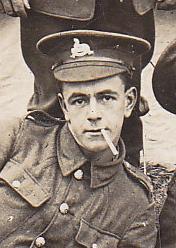
Today we remember Bourne man Ernest Codling who was killed in action on this day, 8th June 1917, serving with the 6th Battalion Lincolnshire Regiment during the second day of the Battle of Messines Ridge.

Ernest Codling was born on the 28th August 1896 at 51 King Street Lincoln to John Codling, a railway porter from Lincoln and his wife Mary Elizabeth Cobb. John and Mary were married in Lincoln in 1892.

John and Mary had 8 children in total, unfortunately they had lost 3 of them before 1911.

  • Albert Codling, 1893, Lincoln
  • Gertrude Mary Codling, 1894, Lincoln
  • Ernest Codling, 1896, Lincoln
  • John William Codling, 1906, Lincoln
  • Doris May Codling, 1910, Lincoln

The three children they lost were between census returns and so their names are not currently known.

In 1901 John, Mary and their three children were living at 37 Queen Street Lincoln. The next year Ernest started St Peter at Gowts infants school on the 11th June 1902 where he remained until 22nd August 1905. The National Schools admission register indicates that when leaving St Peter at Gowts Ernest went on to attend the newly re-organised St Andrews school in St Andrews Street Lincoln.

By 1911 Ernest had moved from home and was living with his uncle, William Marshall Codling, at Watering Dyke Farm, Grange-de-Lings near Nettleham, Lincoln. Here he worked as a farm servant and the census lists his job as “odd duties”.

Ernest later moved back to live with his parents at 1 Naan Cottages, Grey Street, Lincoln and started working as a warehouseman.

During the war years the family moved to Bourne and settled there. Whilst in Bourne the family received the sad new that Ernest’s oldest brother, Albert, who had joined the Lincolnshire Regiment before the war, had been killed in May 1915 in the area around Ypres.

Ernest enlisted into the army at Lincoln on the 8th December 1914.

Ernest’s full service records, like that of 60% of the men from WW1 cannot be found. It is likely that they are part of the records destroyed in a London warehouse fire during the Blitz. The following story of Ernest’s war has been pieced together with as much accuracy as possible for other surviving records.

The medal rolls also show that Ernest has three separate regimental numbers tied into different Battalions of the Lincolnshire regiment. It is likely that on enlistment he was assigned to the 4th Battalion (3442) to start training. The associated medal card shows that he was not eligible for the 1914/15 Star and certainly no 1914/15 star medal roll has been found which would support this fact. You would assume that he did not serve abroad before the end of 1915 however other documents may dispute this fact. Until recent documents were found with regards to a wounded list it was always thought that Ernest did not serve abroad until 1916.

The 4th Battalion had been mobilised for war and landed at Harvre on the 1st March 1915 as part of the 138th Brigade of the 46th Division. There is no documentary evidence to say that Ernest was amongst this first mobilisation and if he had started training immediately on enlistment it could be possible but without the proof we will not describe the exact movements of the 4th Battalion at this point.

Albert Codling, Ernest’s brother was also serving with the 4th Battalion and certainly was part of the first mobilisation in March 1915. Albert had been killed on the 13th May in fighting around Lindenhoek and it is possible that Ernest was already in the Battalion fighting at the same time.

During 1915 the Battalion would also be involved in the first liquid fire attack at Hooge.

We next find that on the Army’s Casualty List issued by the war office on the 28th October 1915, Private Ernest Codling 3442, 4th Battalion, serving in France and Flanders was listed as “Wounded”. In our experience these lists could be as much as 4 weeks and in extreme cases 6 weeks behind real life and therefore the exact date of being wounded and the nature of this remains unknown for now.

During September the Battalion had been at Bellewarde just outside Ypres but during the first week of October they were moved to Busnettes, North-West of Bethune where they underwent training. On the 8th the officers were taken to Vermelles where they inspected the trenches and got a first look at the Hohenzollern Redoubt. The rest of the men would see a model of the Redout 2 days later as part of their training.

On the 13th October the Hohenzollern Redoubt was taken, the 4th Lincs in support of the 5th Lincs and 4th Leics but at great cost to the Battalion with 10 officers and 385 other ranks falling as casualties.

It is not known if it was this action where Ernest was wounded or if it was during the time in late September near Ypres.

After a man had recovered from his injuries, if bad enough he would be sent back for convalescence rather than his old Battalion until a time when he was classed as medically fit re-join a Battalion. In many cases the attrition rate and the rate of replacements was so great that it was most likely that they would be placed into a Battalion that was in most need of experienced men. This may be the trigger for Ernest being posted to the 5th Battalion Lincolnshire regiment (20047) or his later posting to the 6th Battalion (40635), in both cases we have no documentary proof of the dates.

There are similar 200xx regimental numbering ranges being used by men joining the Supernumery Companies of the 5th Lincs around September 1915 (reserve companies on home service), and so we suspect that Ernest Joined a company of the 5th Lincs when he was fit enough and this may have been at one of the base camps or back in England. It is possible that he was then posted to the 6th Battalion when he regained A1 fitness. This is a possibility based on other records for men around a similar time but without any documentary proof plus we have no further wounded lists that support a second injury or posting to the 6th battalion.

We do know that when he was killed, Ernest Codling was with the 6th Battalion and so we can only look at his movements during his last month. Unfortunately, the diaries for the 6th Battalion from this period are largely unreadable and so a ful transcription may take a long while and a lot of patience.

The following extract is from “The History of the 6th Service Battalion Lincolnshire Regiment” by Colonel F.G. Spring, and is the best source of information for this period (May 1917). For clarity the 6th Battalion were Part of the 33rd Infantry Brigade of the 11th Division, 2nd Army.  

“The maintenance of pressure on the Arras front, which kept the enemy constantly on the alert, enabled final preparations to be made for the opening of the Flanders offensive, which was to begin with the Battle of Messines.

The actual front selected for this operation extended between nine and ten miles from a point opposite St. Yves to Mount Sorrel. The objective of the attack was a group of hills known as the Messines-Wytschaete Ridge, which lies about midway between Armentières and Ypres. Messines itself is situated on the southern spur of the ridge which commands a wide view of the valley of the Lys and enfiladed the British lines to the south. North-west of Messines, Wytschaete, situated at the point of the salient and on the highest part of the ridge, commanded a view of almost the entire town of Ypres and all the old British positions in the Ypres Salient.

A special feature in the operations due to take place on the 7th of June was one original in warfare – the explosion of nineteen deep mines at the moment of assault. No such mining feat had ever before been attempted. In the construction of these mines, eight thousand yards of gallery had been driven and over one million pounds of explosives used.

Nine divisions were to take part in the actual assault, and three were in support, among which was the 11th Division who latter lay opposite Wytschaete, and in rear of the 16th Division at the centre of the attack.

Having left Albert (Somme) on the night of 17th/18th of May, the 6th Lincolns detrained at Caëstre and marched to Le Thieushouck where they were billeted. The first three days at Le Thieushouck were spent in interior economy and company training, although the training was greatly restricted by the highly cultivated state of the surrounding ground. On May 22nd the Division was informed that it was to take part in the coming operations, and two days later the Battalion marched to a training area situated on the frontier between France and Belgium, about six miles in rear of the Wytschaete sector. The following two weeks there were spent in training for the attack.

The 11th Division received orders to pass through the 16th Division when the latter had captured its objective. The role of the 33rd Brigade was to pass through and capture a trench system three miles east of Wytschaete.

At midday on the 6th of June orders were received to attack the following morning. Preparations were quickly made and at 11.30 p.m. the Lincolnshire marched to Butterfly Farm, two miles from the front line, to await final orders.

As dawn was breaking on the 7th, there was a sudden rumbling of the earth, huge flames shot up, clouds of smoke, dust and debris, a rocking of the ground – as the nineteen mines “went up.” Before one was able to regain one’s normal faculties, there was another deafening crash as the barrage roared out from a thousand guns. The 6th Lincolns had taken up a position among the “Heavies” and were almost stunned by the ear-splitting din of the monsters as they roared and poured a hail of big shells upon the wretched Germans.

The 6th Lincolns waited in suspense for the first results of the attack. The barrage still continued but at about 9 a.m., word was received that the 16th Division had taken their first two objectives and were pushing on to the third.

At about 11 a.m., orders were received to advance to the Vierstraat Switch, a trench running parallel to, and about a thousand yards behind, the British line.

At about midday the battalion reached its destination and the men had dinner, while Lieut.-Colonel Gater went to Brigade Headquarters for further orders.

Just after 2 p.m., he returned with the information that at 3 p.m., another barrage would fall under cover of which the battalion was to attack the third objective.

The forming-up place was to be two miles away on the further slope of the Wytschaete Ridge but the intervening ground was badly cut up by shell-holes, broken trenches and communication trenches full of troops and wounded men. The battalion, being scattered over a thousand yards of trench, had to be got together, and so as not to be late, Battalion Headquarters and ‘D’ Company started off and arrived at the forming-up line just as the barrage opened. The other companies had not yet come up, so Lieut.-Colonel Gater decided to push on with ‘D’ Company for fear of losing the barrage. ‘D’ Company shook out into artillery formation and advanced. Australian troops were on the right and portions of the 6th Border Regiment on the left, with the 7th South Staffords and 9th Sherwood Foresters in support and reserve respectively.

The enemy’s artillery opened fire as soon as our barrage fell but his barrage was weak and ill-directed, and many of his guns were effectively smothered by our fire. ‘D’ Company extended into line in two waves after passing through the first line of posts held by the 16th Division. Very little opposition was encountered: the enemy either ran or surrendered until the objective was nearly reached. Here the Germans attempted a counter-attack but with the assistance of tanks it was broken up, and by 5 p.m. the objective had been gained. Casualties during the attack had been extraordinarily light, ‘D’ Company losing only two or three men. The heaviest losses were in Battalion Headquarters: Lieutenant F.C. Thorn and Regimental-Sergeant-Major Smith and twenty Other Ranks being wounded.

The senior Company Commander, Captain Howis, brought up the remaining three companies with very few casualties. The appearance of these companies, comparatively fresh and intact, was of enormous value in consolidating the position. As dusk was falling the German guns began to shell the position heavily. Captain Sutherland was wounded in the face, and a platoon of ‘C’ Company, holding a strong point, was entirely wiped out (with the exception of and Lieutenant Read, who was badly wounded).

Early next morning on the 8th, another counter-attack developed which at one time looked serious until A Company, with Lewis gun and rifle-fire, succeeded in breaking it up. Second Lieutenant Rowlands was wounded and ‘A’ Company had altogether about a dozen casualties. One N.C.O. – Sergeant Biggadike – was conspicuous for his bravery; he died very gallantly, successfully maintaining his post which the enemy attempted to rush.

Lieut.-Colonel G.H. Gater was wounded in the face when leading ‘D’ Company to the attack but with great self-sacrifice remained at duty until his battalion went out of the line.

There was another counter-attack on the evening of the 9th, accompanied by heavy shell-fire, during which, to everyone’s regret, the Battalion Medical Officer, Captain Frere, was killed, and many other casualties were suffered.

On the night of the 10th/11th of June, the 6th Lincolns were relieved by the 34th Brigade and moved back to camp near Kemmel. The total casualties of the Battalion during the Battle of Messines 1917 were six officers and one hundred and sixty Other Ranks.

The Battalion remained in camp until the 18th of June, engaged in salvage work, and then began to march back in easy stages to Ganspette”.

Ernest Codling was killed in action on the 8th June whilst taking part in the planned offensive described above.

Commonwealth War Graves Commission:
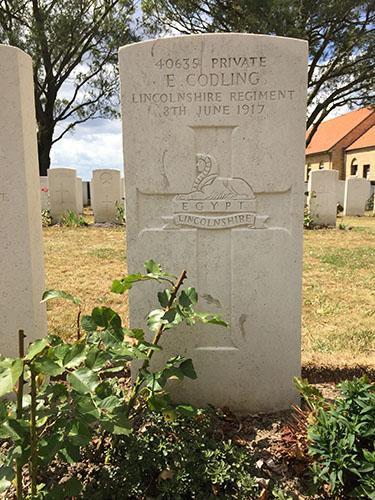
In memory of Private E Codling, 40635, 6th Battalion, Lincolnshire Regiment who died on 8 June 1917
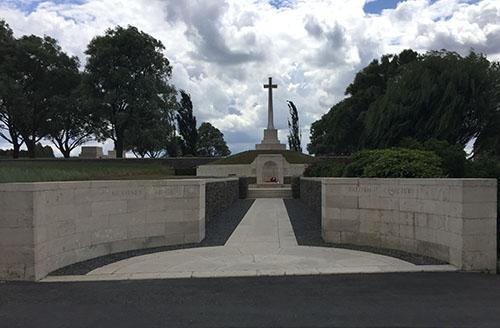
Remembered with honour, Messines Ridge British Cemetery.

Ernest is buried in Messines Ridge cemetery no more than 4 miles from Lindenhoek Chalet where his brother Albert is buried, having been killed on the 13th May 1915 in operations with the 4th Battalion.

Ernest’s photograph courtesy of Jonathan Smith

Remembrance – John Anthony Nowers

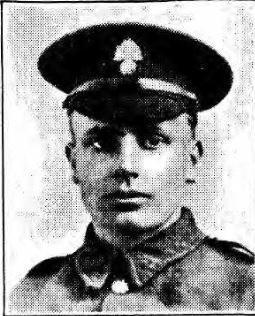
Today we remember John Anthony Nowers, of the 26th Battalion Royal Fusiliers, who died this day June 7th 1917 and commemorated on the Billingborough War Memorial. #OTD

John Nowers was born on 6th May 1889 in Market Harborough, Leicestershire to Ernest Henry Trevor Nowers, an assistant bank manager born in Teyham, Kent and his wife Minnie Elizabeth Terry, born in Lydd, Kent, who were married in 1888 in Romney Marsh.

The couple first moved to Market Harborough, Leicestershire and then by 1891 into Northampton before settling in Empringham Road Stamford by 1901 expanding their family to 4 children.

John Anthony Nowers, 1889, Market Harborough
William Arthur Nowers, 1890, Northampton
Dorothy Mary Nowers, 1893, Northampton
Geoffrey Pickering Nowers, 1904, Northampton

John was educated at Stamford Grammar School.
By 1911 the family had moved again and now were living in Tinwell House, Tinwell, near Stamford. John Anthony Nowers is now working as a bank clerk for Messrs Barclays Bank and his father is working as an assistant bank manager.

Ernest Knowers is also reported as the Reverend Ernest henry Trevor Nowers on some documents, although we have not personally researched this.

John enlisted in Lincoln on 6th September 1915 and joined the 26th battalion Royal Fusiliers (London Regiment).
After training John was finally posted with his battalion to France on 6th May 1916 to serve with the Expeditionary Force.

The following shows John’s movements through a potted history of the his time with the battalion and excerpts from the Battalion diary. These show his first month abroad leading up to the Battalion’s first action; The battle at Fleurs in which John witnessed the first use of tanks in a battle and he received a recommendation; and movements in the month leading up to his death.

4th may 1916 – Aldershot
3am – Battalion entrained (Three separate parties) from Farnborough for Southampton. Embarked on SS Mona-Queen and arrived at Harvre 5/5/16. Transports came over on S.S. Bellerophon.

5th May 1916 – Harvre
7.30am – Battalion marched to No1 Rest Camp, Harvre and rested.

6th May 1916 – Harvre
7.30am – Battalion entrained in two parties at the Gare des Marchandises, Harvre at Point 1 & 3

7th May 1917 – Steenbecque
9am – Detrained at Steenbecque and marched to Staple and were billeted in the vicinity.

8th may 1917 – Staple
Battalion rested at Staple

9th may 1917 – Staple
Battalion marches from Staple to new billets in the vicinity of Outtersteene

10th may 1917 – Outtersteene
7am – 1st Party of Officers and men proceeded to trenches for instruction and were attached to 5th Camerons

23rd May 1916 – Outtersteene
7am – Party of Officers and 1 section of NCOs and men per platoon of A & B Companies proceeded to trenches for instruction and were attached to the 5th Cameron Highlanders.

25th May 1916 – Outtersteene
7am – Party of Officers and 1 section of NCOs and men per platoon of C & D Companies proceeded to trenches for instruction and were attached to 5th Cameron Highlanders.

30th May 1916 – Outtersteene
5.30pm – Battalion marched from Outtersteene to new billets at The Piggerieswhere they arrived on the morning of the 31st instant, after spending the night at La Creche.

1st June 1916 – The Piggeries
In Brigade reserve at the Piggeries Ploegsteert. The day was quiet and there is nothing to record. We suffered our first casualties on active service having 2 men killed and 10 wounded on working parties.

2nd June to 4th June 1916 – The Piggeries
Remained in reserve at the Piggeries. Things were generally quiet and there is nothing to report. One of the wounded men reported above died in hospital at Bailleul.

5th June 1916 – In The Line
6am – The Battalion for the first time occupied the trenches relieving the 18th King’s Royal Rifle Corps in the line and taking over Tp 124 125 126 127. The day was very quiet. There was a little artillery on enemy’s part and enemy snipers were troublesome. There was a good deal of movement in rear and men were putting up wires along Messines Gappard Road.

June – September 1916
This was the first action seen by the new Battalion and they remained in the Ploegsteert area until the 23rd of August 1916 when they entrained at Bailleul for Pont Remys on the Somme, a journey that took 10 hours. Once there they were marched to their billets at Vauchelles de Quesnoy near Abbeville. They remained here in training until the 7th September when they entrained for Mericourt. The next few days saw the Battalion move to Becordel, close to the trenches at Fricourt.

14th September 1916 – Near Fricourt (Battle of Fleurs)
5.15pm – At this hour the Battalion left the camp at Becordel and marched up to the line. The journey was very tiring owing to continual stoppages on the road on account of heavy traffic. At about 9pm we arrived at the brigade dump, east of Montauban where after having received stores, ammunition etc we proceeded via Flare Lane up to our part of the assembly in front of Delville Wood, the Companies taking up their positions for the attack which was timed to commence at 6.20am. The Battalion arrived and took up their positions about 10 minutes only before the attack commenced. They had been on the march from 5.15pm the previous evening and went into attack on the morning of the 15th without a rest or sleep.

15th September 1916
6.20am – The order of battle of our own Brigade (The 124th Infantry Brigade) was as follows, Front line 21st Kings Royal Rifle Corps and 10th Queens West Surrey Regiment. The 26th battalion Royal Fusiliers were in support of the 21st KRRC and the 32nd Royal Fusiliers in support of the 10th Queens. Map Reference, French Map. France. Sheet 57c S.W. Edition 3A.
6.20am – The 21st K.R.R.C were in position for attack on Switch Trench supported by 26th R.F. (Two Companies in Edge Trench and two Companies in Green Trench). Attack commenced at 6.20am.
6.30am – The Battalion were within 80 yards of the 1st objective (Switch Trench) and found that 1st waves were advancing through our own barrage in a half right direction, the left flank being about 300 yards East of Fleurs village. The position of our left flank should have been on Fleurs Road. A halt was ordered and the mistake was as far as possible rectified.
6.50am – The left sector of 1st Objective was taken with very little opposition. Our barrage advanced and infantry followed and took up position in front of 2nd objective – Fleurs Trench. At this point men from various Battalions struggled back through our barrage on the right – 2nd Lieut Gauthern (26th R.F) did excellent work in bringing men out of the barrage at great personal risk.
7.45am – Our barrage lifted from 2nd objective and the infantry moved forward and took the trench. Casualties were suffered here from hostile rifle and machine gun fire. A number of prisoners were taken. Our D Company took something like 150 prisoners. The 2nd objective Fleurs Trench had been severely damaged by our artillery fire.
The infantry remained in this trench until the 122nd Infantry Brigade on our left commenced to clear the village of Fleurs. In the attack on the first objectives the infantry was assisted by Tanks of the Heavy Machine Gun Company but by the time the 2nd Objective was taken there was only 1 tank in our sector which had not been put out of action. This tank was sent forward along the right of the Fleurs village to assist the 122nd Brigade and to cover their right flank. A small party under 2nd Lieut Wood followed the tank to keep in touch with the troops clearing the village. The battalion was reorganised as our barrage moved forward and advanced in two waves.
10.15am – The tank moved forward in front of our waves to the 3rd objective – Hogs Head and Flea Trench. Our first wave was advancing, but when about 200 yards from the Hogshead Lt Col Oakley, of the 10th Queens ordered a withdrawal to Fleurs Trench, the reason being that the troops that had taken the village of Fleurs had lost all their officers and had retired. We proceeded to consolidate Fleurs trench.
3pm – An advance was ordered and under heavy machine gun and rifle fire they occupied the line of the 3rd objective. Shortly afterwards the line again moved forward on the signal of Lieut Colonel, the Earl of Faversham, commanding the 21st K.R.R.C. We advanced toward Gird Trench under heavy and increasing fire, but at a point about 150 yards away from our objective, when our left flank was held up by a part of the enemy who had advanced in front of their trench and lay concealed in a corn field.
5pm – An order was passed down to retire. We could not find out where this order originated and movement backwards was as far as possible prevented but men on our right flank commenced to double back and the right flank was quickly broken. The enemy immediately opened heavy artillery fire along the whole front and we were forced to withdraw to an old trench, situated about N32.a.1.5 which we found occupied by 20 or 30 men and 2 Vickers guns. We could not find anybody on either flank with whom to get into touch and therefore the men were ordered to “Stand to” until dusk. At dusk we retired to a new line which was being consolidated between the 2nd and 3rd objectives. We remained here and proceeded with consolidation.
11pm – The Brigade was relieved by the 123rd Brigade and proceeded into the support line, with the exception of a section under captain Etchells, which was in front of the line and was unable to reach the remainder of the Battalion.

16th September 1916
The Battalion remained in the support line and were subject to heavy artillery fire throughout the whole day. We were not called upon during the day by the Brigade in front. Captain Etchells and his Company were relieved on Saturday evening and in view of the heavy fighting they had done they were ordered to remain at the Brigade Dump during Saturday night and on Sunday Morning they were ordered to proceed back to the transport lines. The rest of the Battalion remained in support during Sunday and although subject to heavy artillery fire suffered no casualties.

18th September 1916
During the early hours of the morning we were relieved by the North Lancashire Regiment and the Battalion proceeded back to the transport lines and after a march and rest returned to camp at E9.
Our casualties during the action were as follows:- Officers, Lieutentants M.J. Shaw, A.S. Wright (Killed): Lieutenants G.M. Starelock, G.K.S.???wood (Died of wounds): Lieutenants Sir W.A. Blount, Bart and Y.K. Patterson, R.LW Francis and C.T. Wells (Wounded). Other ranks 33 (Killed), 58 (Missing) and 140 Wounded.
Prisoners taken by the Battalion – 2 Officers, 158 Other ranks.

As part of the above described Battle of Fleurs, John Nowers in the afternoon and evening of the 15th, remained alone with two badly wounded officers and afterwards insisted in carrying them back, for which he received a Gallantry card and was recommended for the D.C.M.

The Battalion stayed in the Somme area and on the 16th October they were moved behind the lines to Airaines receiving reinforcements and continuing training. Two days later they were moved to Belgium to camps on the south west of Ypres.

The Battalion spent the rest of the year in and out of trenches around the Ypres and Kemmel areas.

On the 4th January 1917 John Nowers of A Company 26th (Bankers) Battalion Royal Fusiliers was admitted into the 139th Field Ambulance with an abscess on his left wrist. Two days later on the 6th January we was transferred to the 41st Divisional Rest Station.

The cycle of front line and training continued into 1917 and by April the Battalion can be found in trenches around St Eloi, south of Ypres before moving back to the training area in May.

1st June 1917 – Arnecke
After spending the night in billets at Arnecke the Battalion entrained at Arnecke station at 9:05am and detrained at Poperinghe station about 11:25am and proceeded to the camp at Micmac North taking over from 20th battalion Durham Light Infantry.

2nd – 5th June 1917 – Micmac Camp North
There is nothing of importance to record during this period. The Battalion furnished a large number of working parties for the front line system of trenches preparing for the offensive operations. Casualties 1 other rank killed.

5th June 1917 – Micmac Camp (east)
6am – At this hour in accordance with March Table, Battalion Headquarters B and D Companies moved from Micmac Camp East up into the trenches. B Company occupied front line trenches O.2.5 O.2.6 and O.2.7 with two platoons and had two platoons in the support line within the same limits. D Company occupied the reserve line, crater Lane to Bus House Road (Exclusive) and Vormezelle sector from junction with Middlesex Lane to Vormezelle St Eloi Road.
Battalion headquarters were in dug outs in Convent Lane. The remaining two Companies moved from Micmac Camp East to Micmac Camp South.
The day passed uneventfully in the line. There was heavy artillery fire on both sides, but there is nothing of importance to record. Patrols were sent out by B company at night. They found the enemy were thoroughly cut and no obstacle. Owing to a bright moon one of the patrols which got almost up to the enemy parapet was bombed and the officer was slightly wounded.
11pm – At this hour A & C companies left Micmac Camp East and proceeded to occupy GHQ 2nd line which they did at 1:30am on the 6th June in accordance with March table.

6th June 1917 – in the line
The whole battalion was disposed in the line in accordance with march table. The artillery duel continued throughout the day otherwise there is nothing of importance to record.
Orders for moving into assembly positions were issued and no indication as to zero hour was received.

7th June 1917 – in the line
The day of the attack on the 2nd Army front from Observatory Wood to St Yves.
According to orders issued the Battalion was supposed to be in its assembly positions 2 hours before zero, 1:10am, but owing to considerable traffic in the communications trenches and on account of the traffic it was not until
2:35am that the Battalion was finally ready and the Companies all out in their groups of waves between our own trench and the support line. Although a bit tired the men were in splendid spirits. They had been trained up to the minute. Every officer and man knew exactly what was the objective was and were ready to gain it. After 6 long weary winter months of waiting in the St Eloi Sector, overlooked by the enemy, every movement and turn observed, all ranks were assembled with one thought – To get the Bosche out of it –
All had complete confidence in our supporting artillery.
2:50am – At this hour the enemy having spotted the Battalions assembling in No Man’s Land began to send up the “stand to” signal (A rocket, bursting into golden red stars) and his artillery opened a barrage. Luckily however his artillery barrage was weak and it did not disorganise or worry the assembled men.
3:10am – Promptly to the second our artillery opened and our line of waves was went forward. About 5 seconds after zero the St Eloi mine went up with a huge blaze and a rocking of the ground. This seemed to startle the men for they seemed to turn left handed. Fortunately, this check was only momentary and the men soon settled down and were over the top and following the 32nd Royal Fusiliers who were in front in good order. The enemy defence barrage came down on No Man’s Land about 4 minutes after zero but it only caught our rear wave and caused little damage. The attack went off exactly as per schedule. The 32nd Royal Fusiliers took the enemy front trenches and at zero plus 35 minutes this Battalion were ready to advance on their objective Dammstrasse. This consisted of a sunken road which was strongly fortified and which was supposed to be a bit of a stumbling block. The ground had been thoroughly prepared by our artillery who maintained a heavy pounding barrage on the objective. The cooperation between the infantry and the artillery was excellent. The advance behind the creeping barrage was orderly and the men kept their distance and direction admirably.
4.11am – Prompt to time the barrage lifted off the Dammstrasse and our men rushed in and captured it with very little resistance and before large numbers of the enemy who had been sheltering in strong concrete dug outs were able to come out and fight. A large number of prisoners estimated between 300 and 400 were taken by the Battalion. Those of the enemy who did not choose to evacuate their strongholds were bombed out of it. The enemy, with the exception of one machine gun crew who was soon knocked out, showed no inclination to fight. He was beaten and demoralised by the intensity of our artillery fire and the suddenness of the attack.
According to orders a line was immediately dug about 50 to 100 yards in front of the Dammstrasse (Blue Line) as close up to our protection barrage as possible and the work of consolidation was carried on with all possible speed. Enemy artillery fire was ineffective.
According to plan the 3 remaining Battalions of the Brigade came up behind us and formed up ready to advance on to the Black Line which they did. All objectives to this Brigade were taken to the scheduled time and were held.
3pm – Exactly 12 hours after zero at 3.10pm the 24th Durhams who had come up across the ground in a magnificent way and went through and carried on the advance and by about 5pm news was received that all objectives had been taken. Meanwhile large numbers of prisoners kept streaming back.
Casualties:
Officers, Wounded 5
Other Ranks, Killed 25, Wounded 161, missing 7.

8th June 1917 – In the Line
2am – At about this hour orders were received for the relief of the Battalion by the 23rd Middlesex Regiment and
the 20th Durham Light Infantry. This was carried out and completed by 3:30am and the Battalion was withdrawn to G.H.Q 2nd Line near Ridge Wood.
During the day the Divisional Commander inspected the men and heartily congratulated them on their splendid achievement.
7:30pm – The Battalion moved from GHQ 2nd Line to bivouacs in Elzenhalle where they spent the night. There is nothing important to record.

During the attack of the 7th June as part of the Battle for Messines Ridge, Acting Corporal John Anthony Nowers was wounded in the feet and whilst awaiting his turn for help was killed by a shell burst.

Grantham Journal Saturday 30 June 1916
BILLINGBOROUGH
KILLED IN ACTION – Mrs Nowers of the Old Hall, received an official notification of Sunday that her son, Corporal J. A. Nowers (Royal Fusiliers) was killed in action on June 7th. The deepest sympathy is extended to the family.

UK De Ruvigny”s Roll of Honour 1914 – 1919
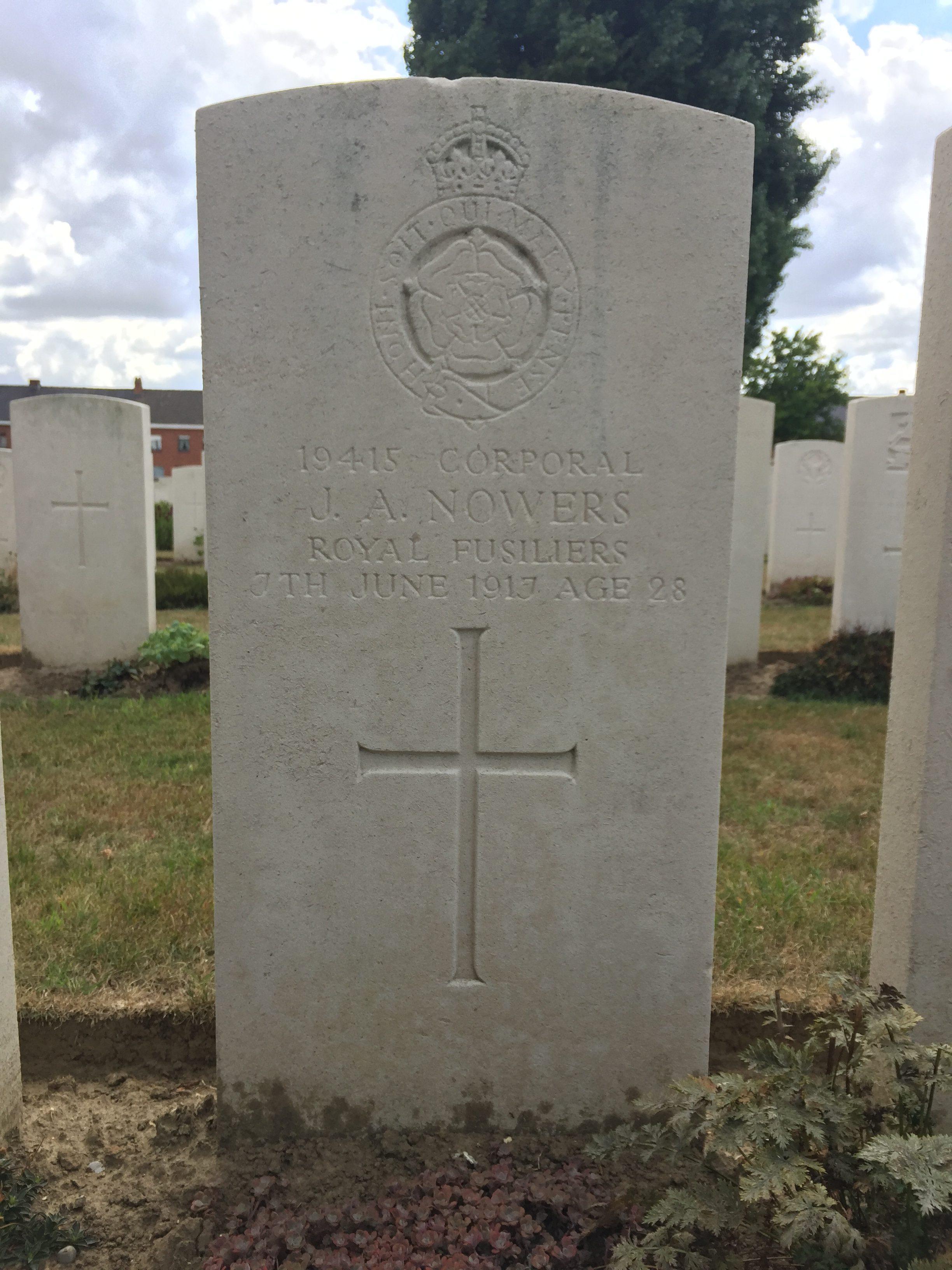
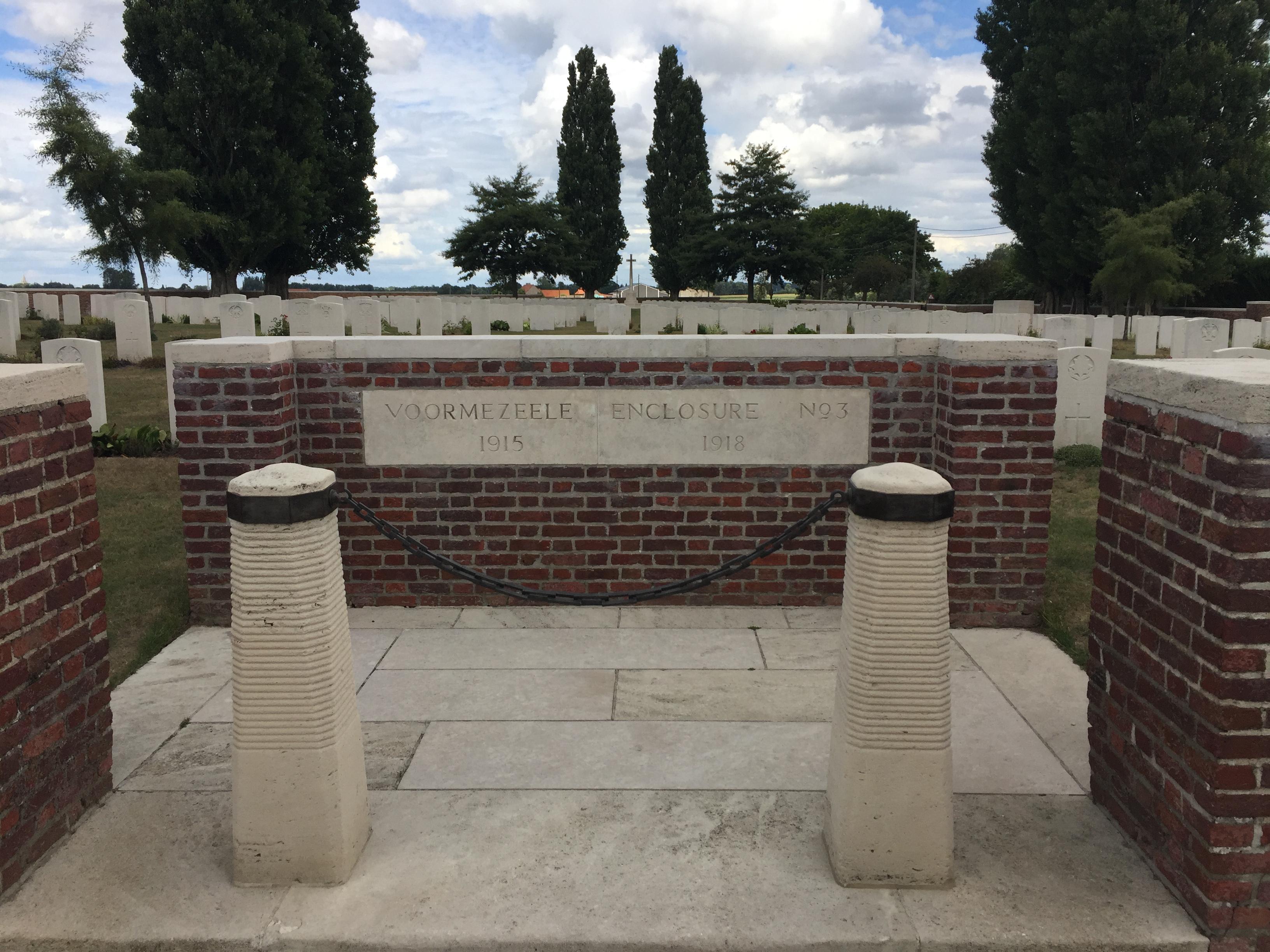
NOWERS, JOHN ANTHONY, Corpl, No. 19415, 26th (Service) Battn. The Royal Fusiliers (City of London Regt). eldest s. of the late Ernest Henry Trevor Nowers of Stamford, co. Lincoln, by his wife Minnie Elizabeth, daughter. of Matthew Terry of Lydd, co. Kent; b Market Harborough , co. Leicester, 6 May 1889; educ. Stamford Grammar School; was employed by Messrs. Barclay & co., Bankers; enlisted 6 Sept 1915; served with the Expeditionary Force in France and Flanders from 6 May 1916; took park in the Battle of Fleurs 15 Sept., on which afternoon and evening he remained alone with two badly wounded officers and for which he received a Gallantry card and was recommended for the D.C.M.; took park in the operations of Messines, where he was killed in action 7 June 1917; was wounded in the feet and awaiting his turn for help when he was killed by a shell. Buried initially at St Eloi in an unmarked grave, John was later reburied in Voormezeele after the Armistice.

Commonwealth War Graves Commission:
In memory of Corporal John Anthony Nowers, 19425, 26th Battalion, Royal Fusiliers who died on 7 June 1917 Age 28
Son of the late Mr E. H. R. Nowers and of Mrs M. E. Nowers of The Gables, Stamford Remembered with honour, Voormezeele Enclosure No 3

John is also remembered on the memorials of Billingborough, Stamford St Mary’s, Tinwell and Stamford Grammar School.

https://www.southlincolnshirewarmemorials.org.uk/…/john-an…/

Remembrance – Ernest Wyles

Today we remember Bourne man Ernest Wyles who was killed in action on the 27th May 1918 serving with the 25th Machine Gun Corps.

Ernest was born in 1890 in Market Deeping to Edward Wyles a gamekeeper born in Market Deeping in 1848 and his wife Emily Bellairs born in Market Deeping in 1849.

The couple were married in Market Deeping on the 8th January 1866 and stayed in Market deeping all their lives having 15 children there. They declared that one child had died before 1911 when they filled out the census.

  • Arthur Wyles, 1866, Market Deeping
  • Edward Wyles, 1867, Market Deeping
  • John William Wyles, 1868, Market Deeping
  • Walter Wyles, 1870, Market Deeping
  • Annie Wyles, 1872, Market Deeping
  • Frederick Wyles, 1875, Market Deeping
  • Emily Wyles, 1878, Market Deeping
  • Albert Wyles, 1880, Market Deeping
  • Levinia Wyles, 1882, Market Deeping
  • George Wyles, 1884, Market Deeping
  • Walter Wyles, 1885, Market Deeping
  • Harvey Wyles, 1887, Market Deeping
  • Percy Charles Wyles, 1888, Market Deeping
  • Ernest Wyles, 1890, Market Deeping

In 1891 Ernest is living with his parents in Towngate, Market Deeping, Edward employed as a Gamekeeper.  Ten years later in 1901 nothing much had changed, they were still in Towngate, and Edward was employed as a gamekeeper although by now only Percy, an agricultural labourer and Ernest, a scholar, were still living at home.

By 1911 They had moved to Uffington with both Percy and Ernest still living at home. Now though Edward is working as a County Council Roadman, Percy is working as a Brewer’s Drayman and Ernest, now 21, worked as a carter in a brickyards.

Ernest was married in 1915 to Ivy Ophelia Parker, a dressmaker, who was living in Eastgate Bourne. She was born in Bourne on the 6th October 1894, the Daughter of George Henry Parker and Mary Jane Philips.

In 1919 Ivy was living at 10 Clarence Terrace, Austerby, Bourne according to Army Pension Records, other records show that she also lived at The Mason’s Arms on South Street in Bourne after this.

Around July 1916 Ernest enlisted in the army. Conscription had come in in January 1916 for all single men of age 18 to 40 to serve their country. This had changed in  May 1916 to include Married men thus making Ernest eligible for conscription.

Ernest’s service records, like 60% of all WW1 soldiers were subject to a fire in the storage warehouse in London during the Blitz. That leaves us trying to piece together his story of the war from various remaining records and therefore exact dates are largely not known.

Ernest on enlistment and training had been posted to the 7th Battalion South Staffordshire Regiment with a regimental number of 25075. After training he would have joined his Battalion in France. They had been out in Gallipoli in 1915 followed by Egypt defending the Suez Canal before being posted to France in July 1916.

We would expect Ernest to join his regiment around November of 1916. As we do not know the exact date we cannot really tell when and where he fought.

The Battalion had been involved in the Battle of Thiepval Ridge at the end of September and then had been moved into the Ancre sector of the Somme by January 1917.

1917 had the Battalion in the Somme initially and then moved out to Belgium in readiness for the battle of Messines Ridge.

On the war office daily list of the 27th August 1917 Private Ernest Wyles 25075 of the South Staffordshire Regiment was listed as wounded. These lists could be 4 to 6 weeks behind the actual dates and therefor there is no actual date or location that he was wounded in the records. At the end of July and the beginning of August the Battalion were in trenches around Hulluch, to the North of Loos.

After leaving the trenches around Merthyr Sap and Bacon Sap on 6th August the Battalion went into Divisional Reserve for one week of training. During August the Battalion lost few men as casualties and the Diary even lists any Privates that were wounded and so we have to assume that as Ernest was not mentioned he was wounded during their last tour in the trenches around Essex Trench at the end of July.

Ernest Wyles was posted to the Machine Gun Corps, the date cannot be seen from any records but in many cases once a wounded soldier had convalesced and then was posted medically fit for action they would be posted to a battalion that was in need of replacements.

We are not sure of the details of his wound, convalescent period, if he re-joined the South Staffs or when he was posted to the Machine Gun Corp, then we have to look at the Diaries for the Machine Gun Corps in Ernest’s last days in May 1918 and their action around the 27th Just south of The Aisne.

9th May 1918 – Herzeele
Battalion entrained at Heidebeke for move to IX Corps (6th French spring? Area), HQ and A+B Companies left at 7.45pm, C+D Companies at 10.45pm. At 10.40pm just prior to the departure o the train, enemy aeroplane dropped 6 small bombs on the metals close to the train. No damage was done. 

10th May 1918
On Train

11th May 1918 – Fismes
Arrived Fismes in the morning. Marched to Cohan to billets. 

12th May 1918 – Cohan
Cleaning up. Services held in the morning. Weather fine and hot. 

13th May 1918 to 22nd May 1918
Training – Training programme was attached to the diary (Appendix no 4). Hot and sunny weather.
52 other ranks reported for duty on 20th May.

23rd May 1918 – Hourges
Lt Col W.T.Raikes to Paris for 4 days leave. Battalion marched to billets at Hourges. 

24th to 26th May
Training – Training program was attached to the diary (Appendix no 5).

27th  to 31st May 1918
Operations, see attached story. 

“Story of operations from May 27th 1918 to June 1st 1918, 25th battalion Machine Gun Corps.

On the night of the 26th of May 1918 the battalion was ordered to proceed to the forward area from billets in Hourges. Companies as under were allotted to brigades and proceeded from camp independently to the following areas:-

A company under Major S.L.Courtauld M.C. to 7 Brigade Guyencourt (Right)
B Company under Major D Campbell to 74th Brigade, Muscourt (Left)
C Company under Capt T.C.B. Udall to 75th Brigade, Ventelay (Centre)
D Company under Major G McCree to reserve in Romain 

The companies arrived after the preliminary bombardment had commenced and the 3 first arrived reconnoitred positions in their respective areas, the 2nd positions (Line of the Maizy Cormicy Road).

The enemy was engaged at about 8.30am by Bouffinereux-Roucy-Concevreux + Maizy. 4 Guns of B company under 2nd Lieutenant W.L. Johnstone did great execution at the bridges at this later place, but were forced to give way and fall back on Muscourt about noon.

Two sections of the Reserve Company were ordered to reinforce 75 and 74 Brigades respectively, and later the remaining two sections were sent to the 74 Brigade where situation on the left flank appeared to be serious.

In the late afternoon of 27th a strong enemy attack was completely wiped out at point blank range on the Muscourt – Romain road by the concentrated fire of 7 machine guns. On the night however the enemy working well through the woods E & W of Guyencourt cut off or destroyed by close range sniping a number of A + C Companies guns. Good work appears to have been done in the attacks, but owing to the infantry retirement, the guns were left entirely isolated and unsupported and the enemy were thus enabled to attack from all sides. Capt T.C.B. Udall who had made his HQ in Roucy, was surrounded and possibly a prisoner.

About midnight 27th the enemy were reported in Courlandon and Ventelay and it was considered unpracticable to hold the salient north of Romain. A retirement was therefore ordered to the high ground N of Montigny. In all 11 Guns were still working under orders of the Battalion H.Q, though it is kown that several others had attached themselves to infantry units in the neighbourhood of Bouvancourt.

By the end of the report on the 31st May the line had been pushed back daily and the Battalion reported the following casualties.

Killed, 5 officers and 10 other ranks
Wounded, 10 officers  and 120 other ranks
Missing, 5 officers and 108 other ranks. 

Private Ernest Wyles was reported to have died and was most likely one of the missing men killed in the action of the 27th May 1918 described in the Battalion diary.

On the 19th December Ivy Wyles was awarded Ernest’s pension and war gratuity and one year later his War Gratuity payment. Ernest’s medal card suggests that as of the 6th March 1923 his British War Medal and Victory Medal were still “Undisposed of” which meant never sent or claimed up to this date.

Commonwealth War Graves Commission:
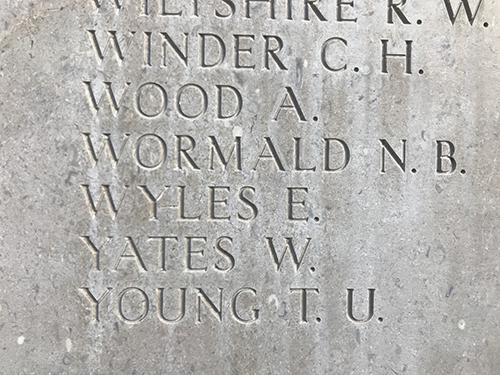
In memory of Private Ernest Wyles, 136409, 25th Bn., Machine Gun Corps (Infantry) who died on 27 May 1918 Age 23. Husband of Ivy Opthelia Wyles, of 15, Mason Arms, South St., Bourne, Lincs. Remembered with honour, Soissons Memorial

Ernest is also remembered on the Roll of Honour in Bourn Abbey Church and listed on the Bourne War Memorial.

https://www.southlincolnshirewarmemorials.org.uk/our-villages/bourne/ernest-wyles/

 We will remember them

Remembrance – Bertie Kettle

This week we remember Bourne man Private Bertie Kettle who died in Leicester Royal Infirmary on 26th May 1919 of Septic Pneumonia. He was a recently ex serviceman who had been serving with the 11th Battalion Leicestershire Regiment.

Bertie Kettle was born between January and March 1894 in Bourne to John Kettle a Fellmonger’s Labourer born in Morton Lincolnshire in 1855 and his wife Elizabeth Holmes, born in 1863 also in Morton.

John was first marred to Rachel Pocock in 1974 and they had lived in Eastgate Bourne but unfortunately Rachel died in 1883 leaving the widow John with four children to bring up.
John and Elizabeth were married in 1884 and this was registered in the Sleaford District. They lived in Bourne where all of their 9 children were born.

• John Robert Kettle, 1875, Bourne (Half brother)
• Emma Kettle, 1877, Gosberton (Half sister)
• Rose Alice Kettle, 1879, Bourne (Half sister)
• Jessie Kettle, 1881, Bourne (Half sister)
• Sarah Elizabeth Kettle, 1885, Bourne
• Mabel Kettle, 1887, Bourne
• John Kettle, 1888, Bourne
• Gertrude Kettle, 1890, Bourne
• Bertie Kettle, 1894, Bourne
• Florence Evelyn Kettle, 1896, Bourne
• Lily Kettle, 1897, Bourne
• Harry Sidney Kettle, 1900, Bourne
• Emily Kettle, 1902, Bourne

In 1901 Bertie was living with his parents in Victoria Place in Bourne. John was working as a fellmonger’s labourer (most likely working in the Tannery for T.W. Mays). Elizabeth and six of their children were in the four room house.
Moving on 10 years and the family are to be found on the 1911 census now in a five room house just around the corner in Eastgate. John is still working as a fellmonger and also now eldest son John and also Bertie are doing the same work., sister Gertie was working at a Pea factory. In 1911 the Eastgate area of Bourne was a hive of activity.

Bertie’s war records have not been found and you would have to assume, like 60% of the WW1 service records, were destroyed in a London warehouse fire in the Blitz.
Unfortunately this leaves us with trying to tell his story through other available records. The fact that he died in 1919 immediately means that records like Soldier’s Died in the Great War do not list Bertie.

On enlistment he was posted to the 11th Battalion Leicestershire Regiment and given the regimental number of 22575. The exact date of enlistment is unknown and as his medal rolls show that he never served with any other battalion, we can say that he would not have most likely joined around the end of October or the beginning of November 1915. This conclusion is made by comparing the enlistment dates of men of the Leicestershire Regiment that had a similar regimental number.

The 11th Battalion were a service battalion of the Leicestershire Regiment. The Battalion was Formed at Leicester in October 1915 by the Mayor and a local committee.
In March 1916 they landed in France and less than one month later, 1st April, came under orders of 6th Division as a Pioneer Battalion. A pioneer battalion could be involved in building or repairing bridges, roads and other similar projects but were a fighting infantry unit and although not normally in the first wave when the Army went over the top would sometimes be called upon to be in the following waves.

As Bertie was awarded the Victory Medal, this meant that he must have served in a theatre of war and so this would suggest that he was mobilised for war and served in France with the Battalion, again the exact dates are unknown. If Bertie had joined around November 1915, it would be most likely that he was one of the men that embarked for France with the 11th Battalion in March 1916. By March he would have a few months basic training before embarking.

The Battalion saw action in the war on the Somme at Fleurs-Courcelette at what was the first use of Tanks in action by the British Army.
In 1917 the 11th Leicesters were in action at Hill 70 in Lens during April and then in November at the Battle of Cambrai and Bourlon Wood.
1918 had them starting on the Somme during March at St Quentin and then in the Lys sector around Bailleul and Kemmel holding off the German Spring offensive. For the 100 days offensive they served in September in St Quentin followed by Cambrai and finally the Battle of the Selle on the 20th October.
They ended the war in divisional reserve at Bohain-en-Vermandois on the 11th November.

After the armistice the Battalion were involved in the march to the Rhine and the occupation of the Rhineland. They had Christmas dinner 1918 on the Rhine and shortly afterwards in 1919 they received orders that in March 1919 the 6th Division will cease to exist. Divisional units such as the Pioneers were posted into the new Midland Division.
Records of other 11th Battalion men would indicate that some of the men and quite possibly Bertie were demobilised in April 1918 at Catterick.

How much of this Battalion’s story is shared with Bertie is unknown. There are no wounded records, mentions in the Times’ Casualty Lists or Silver War Badge records to suggest that his war ended any earlier than March 1919.

Bertie was living with his sister, Rose Neale, at 9 Scott Street, Leicester and was unemployed in May 1919 when he was taken ill and admitted to Leicester Royal Infirmary. He was diagnosed with Quinsy (abscess near the tonsils) which 5 days later developed into Septicaemia and then after another 2 days he died of Septic Pneumonia, aged 25 years.

Bertie’s death certificate states that he was unemployed and an ex soldier with the 11th Battalion, Leicestershire Regiment.

Bertie Kettle is buried in Welford Road Cemetery in Leicester and is commemorated on the War Memorial in Bourne, Lincolnshire and also on he memorial in St Michael’s Church, Scott Street, Leicester.