Today we remember Private Anthony Ellingworth of Horbling who was killed in action on 10th July 1916, serving with the 10th Battalion Duke of Wellington’s West Riding Regiment.
Anthony Ellingworth was born in October 1887 and was baptised in Billingborough Church on the 23rd October 1887. His father Henry Ellingworth, who had worked as a Miller at Stow Mill, was born in Horbling in 1851 and married Sarah Harriss in the Sleaford District in 1875. Sarah was born in Walcott, near Billinghay, in 1852.
When Henry married Sarah in 1875 she already had one son, Mason Harris who was born in 1873.
The couple originally lived around Billinghay but had moved to High Street Billingborough by 1879, two years later the census gives Henry’s occupation as a journeyman Miller.
The census of 1891 finds the family in Horbling. By now the family had expanded to 10 out of their eventual family of 11 children and Henry is now listed as a general labourer. Their children were:-
- Mason Harris, 1873, Helpringham (half brother)
- Herbert Henry Ellingworth, 1875, Billinghay
- Minnie Ellingworth, 1877, Billinghay
- William Ellingworth, 1879, Billingborough
- Frank Ellingworth, 1881, Billingborough
- Edith Ellingworth, 1882, Billingborough
- Susannah Ellingworth, 1883, Billingborough
- Sarah Elizabeth Ellingworth, 1885, Billingborough
- Anthony Ellingworth, 1887, Billingborough
- Thomas Ellingworth, 1889, Horbling
- Harris Ellingworth, 1892, Horbling
In 1901 the family are still in Horbling, Henry working as an Agricultural Labourer and the thirteen year old Anthony is working as a Groom Boy, but this states ‘not domestic’ and therefore we are to assume that he is a groom on a farm.
Unfortunately in November 1909 Henry dies leaving the now 36 year old Sarah in Horbling with four children still at home in 1911. Each child is now grown up William working as a Farm Labourer, Elizabeth a Domestic, Thomas and Harris both working as Grooms.
Anthony by now has moved away from home, living in Grantham and has a job as a Railway Signalman. He is living with William Dunmore, a Railway Goods Guard, and his family at 56 Red Cross Street. Anthony is living in the household as a Boarder along with William’s wife, two school aged sons and their three year old daughter. As this is only a five room house we can imagine that life was very cramped for Anthony.
When war was declared it did not take the now 27 year old Anthony long to answer the call of duty and he enlisted in Bradford possibly in August of 1914.
Anthony’s service records have not been found and so using a calculation on the War gratuity payment that his mother Sarah received, it would indicate that he joined in the Month following the 11th August. This is also confirmed by a newspaper clipping saying that he enlisted soon after the declaration of war.
Research into Anthony’s war has to be made by piecing together surviving records such as Pension and Battalion Diaries. 60% of all WW1 service records were destroyed in a warehouse fire in the London Blitz during WW2.
On enlisting Anthony was given the regimental number of 11733, and then at some point posted to the 10th Battalion Duke of Wellington’s West Riding Regiment.
The 10th Battalion was formed in September 1914 as part of Kitchener’s Third Army. After being formed in Halifax they were then moved to Frensham for training as part of the 69th Brigade of the 23rd Division. Following on from Frensham they were moved to Aldershot where training continued.
In February 1915 they moved to Folkestone and then Bramshott before eventually being mobilised for war in August 1915.
If a soldier was posted for overseas service before the end of November 1915 he would receive the 1915 Star as a medal, unfortunately no record of this can be found with Anthony.
We have however found that there is a 1915 Star medal roll in the name of J W Ellingworth with the same 11733 regimental number, serving with the Duke of wellington’s. As there cannot be two regimental numbers in the same Battalion we have to assume that Anthony and J W Ellington are one in the same.
Newspaper articles after his death do say that he had been in France for something like 11 months and the letter from his Sergeant says that Anthony had been under him for 9 months .
Anthony also known as J W Ellingworth to the Army for whatever reason, arrived in France on the 28th August 1915.
The Battalion Diary tells of their mobilisation from Bramshott. The Battalion received their orders on the 23rd August 1915, and they left Liphook Station in three parties starting on the 24th.
The first Party consisted of transport, machine Gun Section and 110 men of A company sailed to Harvre from Southampton. The remaining parties sailed to Boulogne from Folkestone on the 27th.
On arriving at 11:30pm in Boulogne the main party encamped for the night two and a half miles from the harbour. At 5am they were on the move again eventually arriving at Watten around 4pm, then marching to Nortleulinghem and their billets, once again meeting up with the transport section.
Here the Battalion undertook training consisting mainly of route marches and it was not until the 6th September that they marched out of Nortleulinghem for Wallon Cappell. The next day it was marching again and the destination of Outersteen. The 50mile march over two days took its toll especially on the first day when the 20 miles plus a mixture of hard roads and great heat was given as the cause for numerous men to fall out.
They were now in the Ballieul sector of the western front to receive instruction, eventually on the 13th September the men of C and D companies saw trenches for the first time and were there for 24 hours of instruction. A and B companies taking over the trenches then next day for their 24 hour instruction.
We refer again to the Battalion Diary to take us through Anthony’s and the Battalion’s first action of the war.
The first full tour of the trenches took place on the 15th September and now the Battalion had taken over the trenches occupying T52, T53, T54 and part of the Bois Grenier line from Moat Farm to the North east. Despite enemy sniping during the Battalion reported no casualties.
On the 16th the Battalion Diary reports: ‘ All quiet. Artillery duel over our heads. German’s retaliated on our trenches but did no damage – we suffered our 1st casualty no 13684 Pte Arthur Hargreaves A Company was sniped whilst cooking his dinner. He died instantaneously. In the evening the dumping ground was swept by machine gun fire by the enemy, during this time Lance Corporal 11611 R W Tillebrooke of A Company was shot through the head. Both casualties were buried in the Bois Grenier Church Yard, crosses were erected over their bodies.
During their first tour of the trenches a few other things were of note apart from the weather which was described as ‘all you could wish for’. On the night of the 17th an alarm was sent up that the Germans were attacking our trenches but no attack arrived.
On the 19th the trenches were passed over by hostile aircraft and anti-aircraft ammunition was wasted on them as none were hit.
That same night the Germans shouted across to our lines, but what they said was hardly audible as we are 400yards from their trenches.
A great bombardment was started from our side on the 21st September and during a period of enemy retaliation one of the two tanks in the water farm was punctured. This was serious it was now difficult to maintain a big supply of water.
During the that night working parties were using sand bags to surround the remaining water and then on the second day of the Bombardment the Battalion received orders that on the Wednesday they were to carry out an attack.
24th September 1915
At 4am all were in position and at 4.25am the bombardment commenced, all guns of all calibre and rifles were firing rapid. The Germans sent up many flares but did not retaliate until our bombardment ceased. They then sent several heavy shells and Whizz Bangs into us without however doing any harm to the trenches. During this affair 5 men were wounded some seriously. After this all was quiet for some hours at about 9am our guns commenced a steady bombardment of the enemy lines, doing much damage to their parapets but very little otherwise.
The enemy retaliated with heavy shells (4-5 howitzers and 77mil) which damaged our communication trenches in parts. During the morning we suffered a casualty No 11641 Pte A Flitcroft, D Company. He was shot through he head by a sniper. In the afternoon one man was wounded.
In the evening we got the order to cut gaps in our wire. Operational orders were given to the companies. In the evening hostile aircraft were active but owing to the wet and a stiff breeze did not remain in the air long. During the night all was quiet, working parties from each company went outside our parapet and cut openings in our wire, through which we could pass if the order to advance was given.
25th September 1915
4.25am – Punctually to the minute a most terrific bombardment by our artillery on the German lines commenced. This was the commencement of. Forward movement by the 3rd Army Corps which in its turn was a small part of a large advance by the French and English troops.
Almost simultaneously the enemy retaliated and a terrible artillery fire was kept up for several hours and did not quieten until about 2pm. For the most part, the German shells burst behind our firing trench
and in consequence little material damage was done . The moral effect however was great. Our men were splendid, especially considering it was their first real action. During the morning we only suffered 14 casualties of which only 2 were serious, one proved fatal the man dying shortly after being admitted to the field ambulance.
At 4.30am the 8th Division crossed to the German trenches covered by smoke bombs and took over the trenches with no difficulty. They passed on, meanwhile the 69th Brigade of infantry 10th Duke of Wellingtons and 8th Yorkshire Regiment being in fire trenches kept up a bombardment with rifle fire which had the effect of drawing a great portion of the enemy fire from the troops which were actually attacking. During the morning, no orders were received to advance. The attacking battalions were relieved during the day which showed a very satisfactory advance by the allies.
The message with reference to the German movement afterwards from Lille gave misgivings of a heavy counter attack by the enemy. The men by now are completely worn out having been 12 nights in succession in the trenches, followed up by this terrible bombardment
26th September 1915
The morning of the 26th a Brigade order was received to the effect that the Battalion would be relieved
by the 11th West Yorkshire and that we were to take over their billets about 1 1/2 miles north of Bois Grenier. During the day it was exceptionally quiet.
Reassuring Bulletins were received from HQ showing good progress on the part of the allies, the French as well as on the part of the British troops.
At 7.30pm reliefs commenced and by 11.30pm was complete. By 12.30pm the battalion was in its new billets, which consisted of small huts specifically built for the purpose.
During the last two days in the trenches, owing to the mud which was ankle deep, matters were rather uncomfortable for the men.
27th – 30th September 1915
Nothing to report. Good news continued to arrive from all sides. On the morning of the 30th C & D companies relieved the 8th Yorks in the Bois Grenier line. Weather colder and some rain.
This extract from the Diary shows that the Battalion had a fairly through first tour of the trenches, 12 nights in total and during this time they has received their first casualties, seen hostile aircraft, been subject to artillery and machine gun fire, been in support of a forward advance, been ankle deep in water and provided working parties to save their drinking water and cutting their own wire.
We now move forward to Christmas 1915 and the Battalion were in billets at Rolanderie farm near Erquinghem to the south west of Armentieres.
24th December 1915
Still very rainy, to walk about is difficult, our heavy artillery has been at work all day, nothing further to report.
CHRISTMAS EVE – artillery duels in progress ours is sending some very heavy shells over. A plentiful supply of useful presents has arrived for the Battalion and all are making as merry as possible under the circumstances.
25th December 1915
The weather continues rainy. Artillery duels are still in progress our heavies being particularly active. A concert for the Battalion has been arranged for.
The above mentioned took place in a large barn close to billets which was prettily decorated. The programme which is attached was gone through and greatly enjoyed.
Our heavy artillery is very active again. The rain came on very heavily and continued through the night.
During 1916 the Battalion would be part of the relief of the French 17th Division between Boyaude l’Ersatz and the Souchez River and the German attack on Vimy Ridge, before arriving on the Somme for the Start of the Battle of the Somme with, the Battle for Albert, The Battle of Bazentin Ridge, The Battle of Pozieres, The Battle of Fleurs-Courcelette, The Battle of Morval, The Battle of Transloy and the Capture of Sars.
Unfortunately for Anthony he would not see many of those battles and to continue his story we move forward to the start of the Battle of the Somme once again told from the 10th Battalion Diary.
The battalion were in Enquin Les Mines on the 23rd June when they received orders to move the next day to The Somme by train, travelling by night via Lillers, Chocques, Calonne Ricoart, St Pol, Doullens, Vignacourt, through Amiens to Longueau. They detrained at 2.30pm.
The Battalion moved off again at 4am on the 25th passed through Amiens to Fremont where they took over billets at 9am. Eventually by the 30th June, the eve of the first day of the Battle of the Somme, the Battalion had moved on to Coisy and billets and bivouacs.
1st July 1916 – Coisy
Fine day . A little training being done, received orders from Brigade that the Battalion would be prepared to move at 6 hours notice. Definite orders soon followed and the Battalion moved off at 8pm.
2nd July 1916 – Baizieux
Arrived at Baizieux at 2am. The Battalion was rested by the best means at disposal about 7.30 received orders that the Battalion would move at 8.25pm to North West of Albert. The place was reached at midnight and Battalion was bivouacked in a field.
3rd July 1916 -Becourt
Received orders that the Battalion would move to Becourt Wood. We formed up at 11am and arrived at 4pm. There we stayed the night.
4th July 1916 – Becourt
Still at Becourt Wood. During the day there was a heavy downpour of rain and as a consequence things were not comfortable. During the evening orders were received to capture and consolidate certain positions.
5th July 1916 – Trenches
A copy of the operations carried out is attached marked ‘A’. This is the first time that the Battalion has been employed on an attack, and it is a great pleasure for me to say that all ranks worked magnificently.
The Battalion is composed of the real material. The men worked well under the guidance of their officers. Many ddeds of valour were performed by both officers and men. Our casualties read as follows:-
4 officers killed, 2 officers wounded, 13 other ranks killed, 66 other ranks wounded
Discipline played an important part in the operations and the training of the past 10 months in this country has not been work in vain. There was much individual effort and intelligence shown. The battalion was relieved by the 8th Yorks Regiment, the Battalion returning to Becourt Wood – the relief complete at 10pm. The undermentioned officers were lost to the Battalion and are greatly missed – they were popular with all ranks.
Captain H M S Carpenter – Killed
Lieutenant A K Laverack – Killed
Lieutenant L Hammond – Killed
2nd Lieut W D Taylor – Killed
2nd Lieut C Snell – Wounded
2nd Lieut C G Meryweather – Wounded
6th July 1916 – Becourt
Fine day which was spent easily, the men cleaning themselves up and relating to each other their past recent experiences. At 7pm orders were received for the Battalion to move to a field for the night south of Albert. Arrived there at 8.30pm. A good square meal was provided for all ranks.
7th July to 8th July 1916 – Lozenge
Reveille 4am, received orders to issue two days’ iron rations to the Battalion. Moved off at 6am & marched via Becourt Wood to the captured trenches on the left of Lozenge Wood.
Rain began to fall heavily at 9am and continued throughout the day. The 24th infantry brigade attacked Horse Shoe Trench and Shelter Alley. About 8pm the Battalion moved to the dump at Lozenge Wood where they were at once instructed to dig themselves in. We sustained a few casualties during the process.
9th July 1916 – Trenches
Artillery is moving forward. In the late evening C&D Companies were fitted up with all requirements for an attack and they were accompanied by about 50 of the Royal Engineers and proceeded to the front line system of defences, to the left rear of Peak’s Wood. A & B Companies moved to the right of Sunken Road and dug themselves in whilst HQ proceeded to the German Bakery on the left of the same wood. This bakery is a substantial construction and is about 20 feet below the surface and has two tunnel staircases. It is at present being used by our own men as an advanced dressing station. It is quite proof against shell fire. Beyone heavy artillery fire there is nothing to report.
10th July 1916 – Contalmaison
About 6pm A & B Companies moved up to the trenches occupied by C & D Companies and just at this point the enemy placed a heavy barrage on the ridge and heavily shelled the now crowded trenches causing many casualties. C & D Companies advanced on Contalmaison and were followed later by A & B Companies as will be seen in the attached copy of operations marked ‘B’ the attack on the village by the 69th Brigade was a great success. Our HQ assisted by a carrying party of the Duke of Lancaster’s Own carried stores, ammunition, bombs etc. straight by the road to Contalmaison and assisted in the consolidation of the captured positions. A large quantity of 4.2 shells and stores of other descriptions were found in dug-outs, they having been abandoned by the enemy in his flight. Our artillery kept up a continuous barrage and we held the position.
11th July 1916
About 3am our machine guns were in action against a small party of the enemy, who it is thought were coming to surrender. Our men did not leave anything to chance, as the light was bad their intention could only be assumed. They however returned. Judging by the state of the village, the enemy did not intend to leave this position and was probably under the impression that it was impregnable. The artillery worked magnificently. They were called upon to make a great effort and responded to it. It is impossible to speak too highly of the that branch of the service. The Battalion moved into a field North West of Albert and bivouacked for the night.
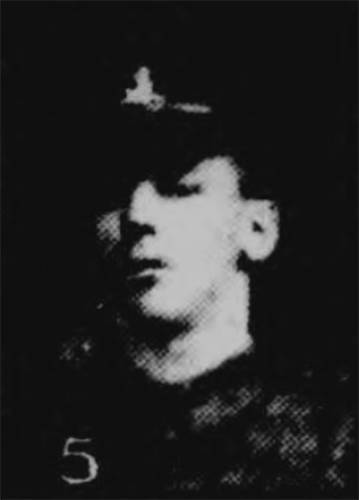
Private Anthony Ellingworth of the 10th battalion Duke of Wellington’s West Riding Regiment was killed in action on the 10th July during the attack on Contalmaison.
———————————–
Grantham Journal Saturday 19th August 1916
Lance-Corpl. ANTHONY ELLINGWORTH,
of Horbling
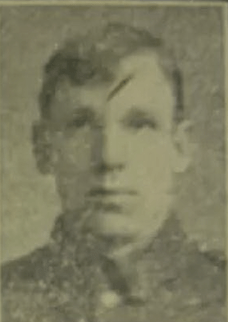
Lance-Corpl. Anthony Ellingworth, the fifth son of the late Mr. Henry and Mrs. Ellingworth, of Horbling, Folkingham, was killed in action during the great advance at the beginning of July. Lanc-Corpl. Ellingworth enlisted in the Duke of Wellington’s Regiment soon after the declaration of war, and had been our in France for something like eleven months. during that time, he had been in many engagements, and had, luckily come out unscathed. The news of his death will be received in the village with the profoundest regret. His mother has received a sympathetic letter from Sergt. B. McAvan, of her son’s regiment. He states- “He was the best lad in the Company, and all the boys send you their deepest sympathy in your trouble. He was loved by everyone, because he was such a good, quiet lad, and it’s a pity to be losing such fine young fellows. I have had him under me this last nine months, so I know well enough.”
Sgt Brian McAvan was awarded the Military Medal during July 1916 but he would himself be killed in action on the 3rd May 1917.
Commonwealth War Graves Commission:
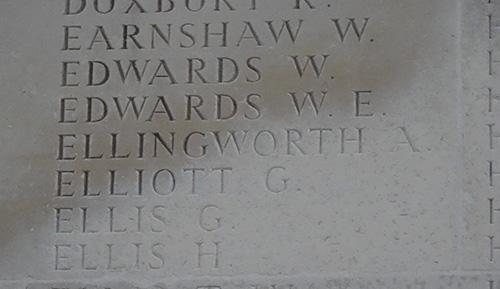
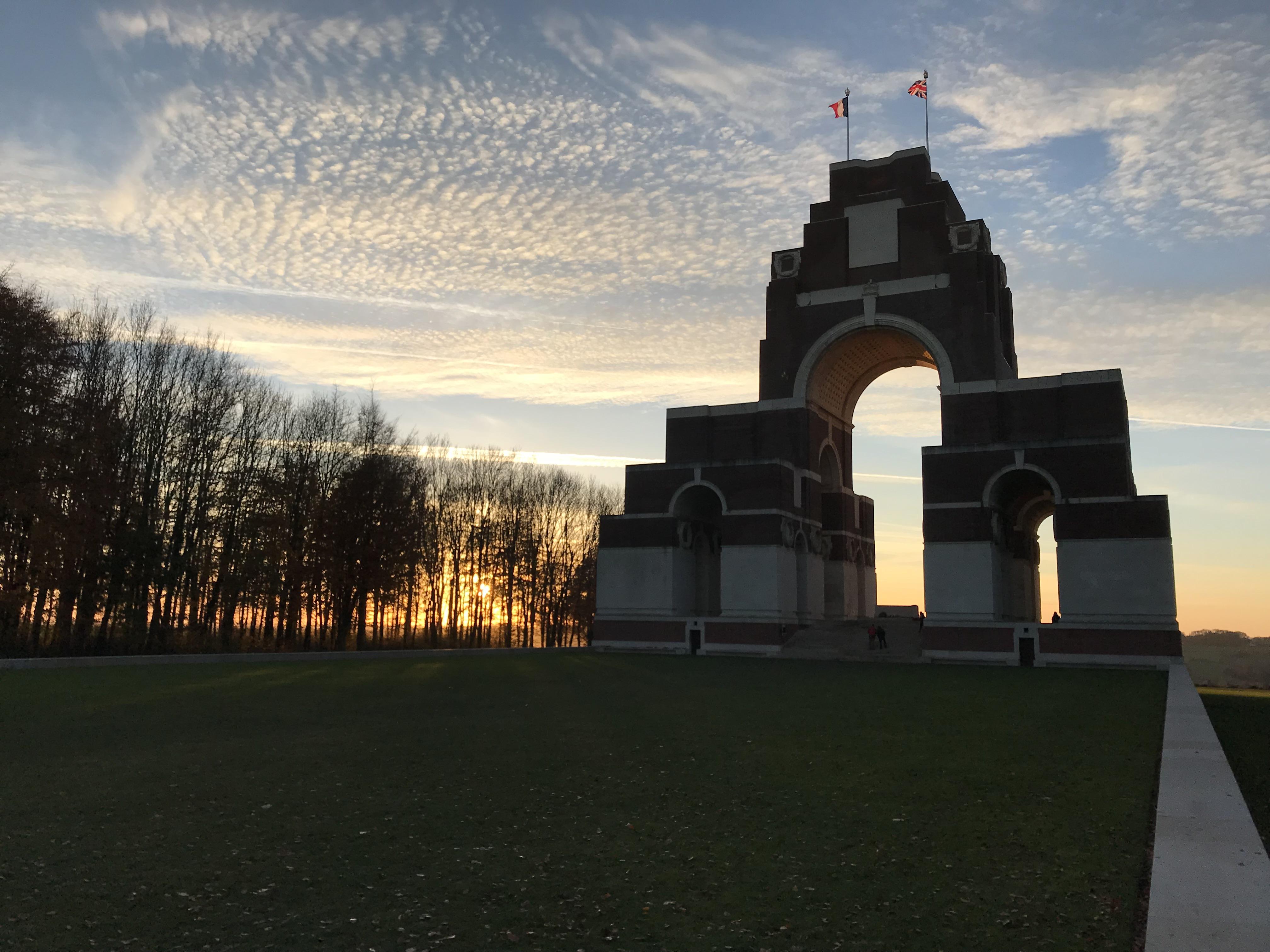
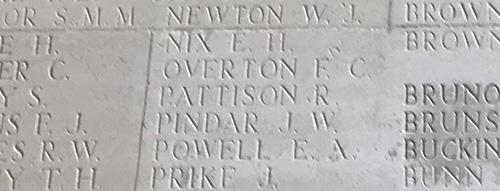
- In memory of Private Anthony Ellingworth, 11733, 10th Bn., Duke of Wellington’s (West Riding Regiment) who died on 10 July 1916. Remembered with honour, Thiepval Memorial
Anthony Ellingworth is also commemorated on the Roll of Honour in St Andrew’s Church Horbling Lincolnshire.

Recent Comments