Messages from the front, Bourne and thoughts of Rippingale.

Messages from the front reveal a yearning for home and family – Local – Bourne Local

This is an interesting local article by Rex Needle I found whilst browsing the Bourne Local website searching for an article about the Rippingale war memorial. Not what I was looking for but then again I am used to going off at a tangent when doing research.

The letters home article interested me as the first letter was written by Samuel Tipler of Bourne. The name Tipler is one that attached to my extended family tree many years ago through another family name. At the time we did not look too closely at them but I remembered that we added a couple of generations. Samuel unfortunately did not appear in my extended tree but some very quick research shows that he was born in Windsor and that his father, also Samuel was born in Bourne. It would appear that the family moved back to Bourne when Samuel junior was aged 5. The 1911 census shows Samuel working on a farm in Tongue End only a few years before entering service during the Great War.
The second letter was written by Percy Lunn, not a name that I have had to look into before but one that I remember being a local surname from my youth.

My interest in the Rippingale article was aroused because after researching the men named and thinking he had finished his work, the author was then alerted to the fact that there are other men with links to Rippingale that do not appear on the memorial.
One such name was John Thomas Taylor, a person we had only researched a few weeks ago. This John Taylor was born in Rippingale and then moved via Morton to Edenham before getting killed in the Great War. We have previously researched John Thomas Taylor in an effort to disprove that he could have been the John Taylor was who is listed on the Morton War Memorial.
Now all that remains is to find out where John Thomas taylor is remembered if it is neither Morton or Rippingale. Perhaps a trip to Edenham Church will reveal the answer.

I still need to find the article from the Bourne Local about the Rippingale memorial if it was online but at least I now have a paper copy to study.

Jamie

John and Joseph taylor – Morton War Memorial

John and Joseph taylor – Morton War Memorial

Two more Morton soldiers identified and written up.

John and Joseph taylor have taken some investigation in order to prove who they were.

The issues have been that Joseph Taylor, the eldest son of Joseph Parker Taylor was possibly registered   2 years after he was born thus only registered at the time of the marriage of his parents.

Joseph’s mother had died before the 1911 census and on the census return all of the siblings of Joseph Jnr have incorrect ages listed. In order to prove the age of Joseph it was necessary to find him on the 1911 census. When this was found his age was listed correctly as 18.

John Taylor was likewise an issue to prove. Again the age was mis represented on census returns by his father. This meant that there were two possible John Taylor’s that were born at similar times both registered in the Bourne district.

The only way to prove that the John Taylor that was listed on the Morton memorial was John Taylor brother of Joseph was to find what happened to the other John Taylor.
The second John Taylor was found to have been born at Rippingale and eventually found his way to Edenham via Morton. In reality this John was John Thomas Taylor but this alone was not enough proof of the true identity.

Searching the Ancestry.co.uk databases we could not find out what happened to John Thomas Taylor. There appeared to be no marriage or death records for this John Taylor and so it was not possible to separate him from the other John Taylor.

Eventually we managed to find what happened to John Thomas Taylor and found him on the CWGC database as killed in WW1. Luckily the database entry lists his family as living in Scottlethorpe (Edenham). This ties him to the Rippingale family and therefore eliminates him as being the John Taylor on the Morton War Memorial.

That leaves us with John Taylor the brother of Joseph Taylor as, we believe, the correct John Taylor on the Morton war Memorial.

The unfortunate side to this investigation is that we now believe that Joseph Parker Taylor, after loosing his wife and having to bring up his family alone, was then faced with losing two sons in the war.

     Joseph Taylor                                                                                                             John Taylor


Sgt Arthur Bates – Lincs Regiment 1914

Sgt Arthur Bates – Lincs Regiment 1914

Today has been another interesting diversion from what we set out to research.
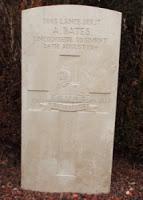
We had some time ago posted the military history of Arthur Bates onto our website www.jamieandsue.co.uk but had never been able to work out who he was to write his family history. Today has been an interesting search where we found Arthur Bates on the 1911 census for the first time. Armed with his age and a rough date of birth we managed to find his family on previous census returns but without his father present after 1881. The reason for this was that his mother was listed as a widow from 1891 onwards.
Using the wonderful British Newspaper Archive now available through Find my Past we found a listing for the death of an Edward Bates of Morton in November 1886. This was the final piece of the jigsaw allowing us to piece together the family history of Arthur.
Collating all of the information was another matter. The method of collating information from various records over a 50 year span is an interesting prospect and the easiest for us is to create a family tree. Using Family Tree Maker and the Ancestry website tends to work for us but we don’t really like to create online trees just for this purpose. As luck would have it, one of Arthur’s cousins was married to a Needham from Morton and this family has already been added to the “Jamie Lawrance Ancestry” tree already online through wwwAncestry.co.uk
In order to start adding Arthur’s ancestors to the tree meant revisiting some research we added to my tree years ago when we were asked to research the Scotney family for a friend. Making the link between the Needham family we had and the Bates family Needham link was fairly simple and once this was added to the on-line tree the rest of the Bates family could be added to create a complete immediate family tree for Arthur Bates. This now puts my extended on-line family up to 4564 people.
We are aware that descendants of this Bates family are still living in Morton and this made researching the descendants of Edward Bates even more important to us as any extra Morton research is always of interest.
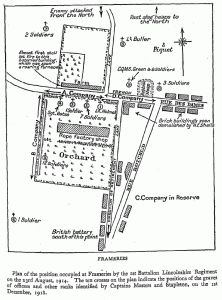
What we have established today is that the Arthur Bates we visited in the cemetery at Frameries last year, was actually a career soldier working his way up to the rank of Lance-Sergeant, before becoming part of a rear guard action that certainly saved the lives of many soldiers caught in one of the earliest actions of the Great War.
                                     Jamie     1.12.12

Web site update

Our website now has a new look and feel. Well done Sue, the collage at the top looks really effective and immortalises some of our family.
www.jamieandsue.co.uk
I have been working away this week but for once the venue had no connections to any WW1 history.
Must make an effort to finish off the remaining stories of the Morton War Memorial men, but if I do, what next?
We have finally received the military records for Sue’s Granddad Haver from the MOD, so I am looking forward to some WW2 research next.
Jamie

Arthur Charles Parker Hillingdon and Uxbridge Cemetery Visit

For three years we have been puzzling over the name Arthur Charles Parker.

He first came to our attention when we started to research the men of the Morton War Memorial. Our initial research drew a blank as to who he was. We checked other websites, such as the wonderful Roll of Honour website and yet still he remained a mystery.

Following our recent holiday we renewed our efforts to find out who this man was, all we know is that he had to have had a link to Morton otherwise he would not have appeared on the memorial.

My clever wife would not let this rest and managed to find a probate record for an Arthur Charles Parker for the correct period. When we looked into this we found out that the estate of this Arthur Charles Parker, a Lieutenant, went to his father Arthur Parker of Stonebridge, Grantham who was a Brigadier General. This new information rung some very big bells from our past research and at last we had something that ties Arthur Charles Parker to Lincolnshire.

Many years ago we researched Hanthorpe House and it’s then incumbent family called Parker. This family lived in Hanthorpe from around 1830 until 1910 and then a descendant returned in the early 20th century. The original Parker in Hanthorpe House was Lieutenant Colonel William Parker a JP and once Lord Lieutenant of Lincolnshire.
Lieutenant Colonel Parker’s Son went to live in Grantham when he left Hanthorpe so we now had a link between Arthur Charles Parker and the Morton area. A look back at the family research we did for the family many years ago showed that the Arthur Charles Parker on the Morton war memorial was in fact the Great Grandson of Lieutenant Colonel William Parker of Hanthorpe House.

Armed with the correct information we headed for the Commonwealth War Graves Commission website and downloaded the information on there about Lieutenant Arthur Charles Parker of the 18th (Queen Mary’s Own) Hussars who was buried in the Hillingdon and Uxbridge Cemetery near London.

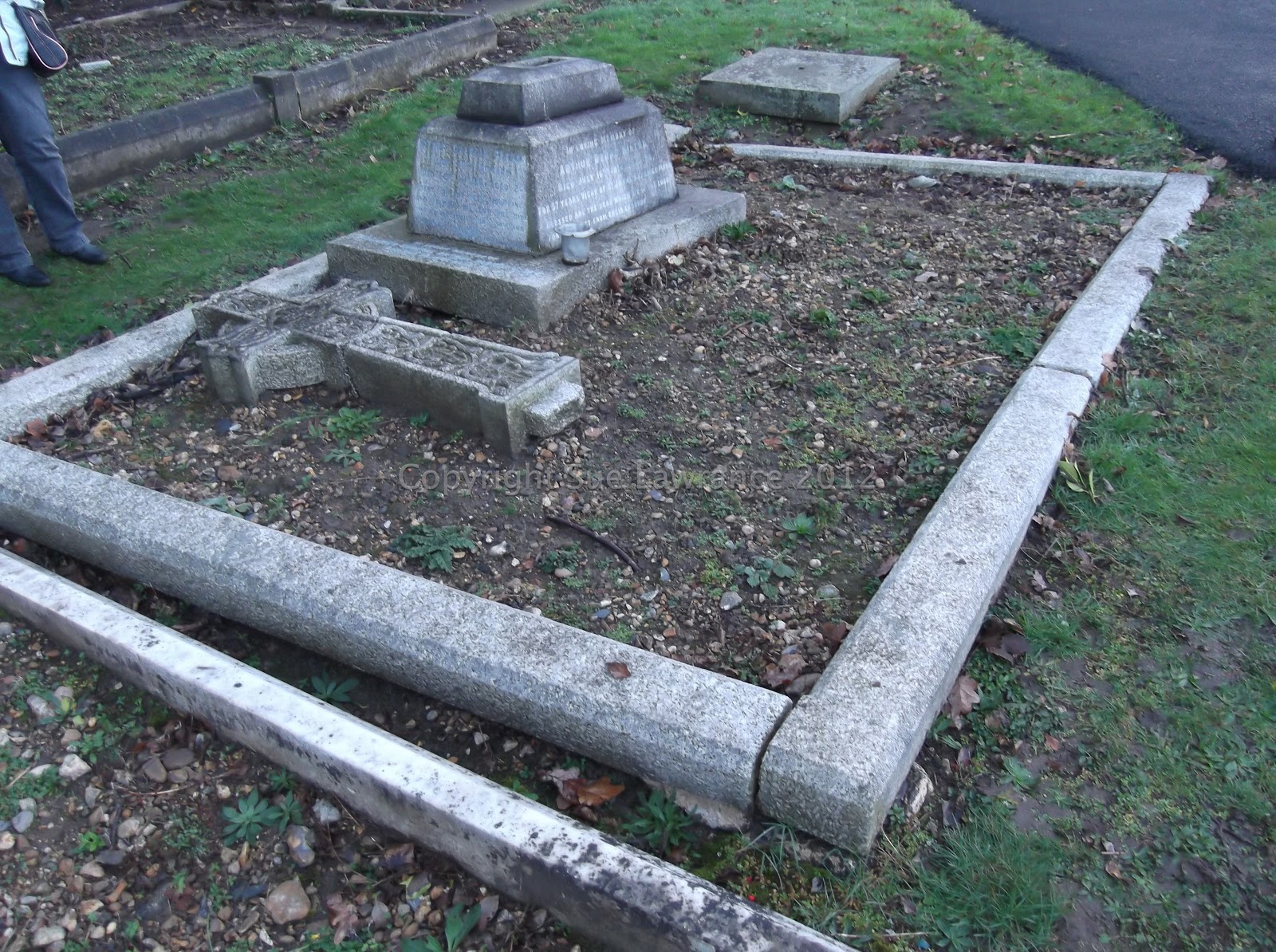
Having yesterday visited the cemetery we discovered that Lieutenant Arthur Charles Parker was buried in a family plot with his Father, Mother and his members of Mother’s family, Hilton.

As per usual armed with trusty camera we have now placed photographs onto our flickr account and will soon be writing up the history of Arthur Charles Parker our missing Morton war memorial name for our website http://www.jamieandsue.co.uk/mortonwarmemorialpage.asp

Photos are online at Hillingdon and Uxbridge…

 Jamie

Recent holiday with WW1 connections

Most people get on a plane or a train and head off to the sun or the snow to relax, well this really is not us.

Our recent holiday saw us driving through Europe spending some relaxing! time in Austria and then heading back. The interest to our readers of this kind of wacky race around Europe comes in some of the places we visited.

I our first day we visited another 6 Commonwealth War Graves sites around Loos, Arras and the Somme. This has been an ongoing project of ours that was born out of the research we are carrying out into the names of the men on the Morton War Memorial. One thing we always wanted to do was turn the names into real people and as part of this we set out our goal and decided that as we could never meet these people, the next best thing would be visiting their graves or memorials.

At the start of our holiday we realised that out of the sixteen names on the memorial we currently had visited only eight. One name is commemorated in Gallipoli, Turkey and one we could not find out who he was, so that leaves us with six more that are all in northern France.

So, here we are on day one of our holiday planning to visit four of our fellow Morton Lads but as luck would have it we caught an earlier Eurotunnel train, allowing us an extra couple of hours. In the end we were able to visit all six on the one day.

The cemeteries and men in question are listed below and each contains a link to the photographs we took at each (Click on the cemetery) and our history page for each man (Click on the soldier’s name)


Apologies if you are interested in one of the names that still haven’t been added to our site yet. I promise I will get round to writing up the research….. eventually.
Following a great night in Arras we continued on with our travels and during the trip we were also lucky to visit Verdun and also Ypres.
I must add one last comment, if you get even the slightest chance to visit the new Flanders Fields Museum in the Lace Hall in Ypres, please take the chance whilst the current interactive exhibition is still running. This is probably one of the most moving museums I have ever visited.
Jamie

The start of Blogging…

Ok Folks, well we have arrived at a blog. Why? you may ask.

Well we are constantly adding to our research that is carried out for our hobby of history. Over the years interested people have asked questions about our research, many comment about the lack of updates on the www.jamieandsue.co.uk website, many don’t know that we have Twitter, Facebook and Flickr accounts that may or may not get regular updates. Our family history research can be found on Ancestry.co.uk, our photos on Flickr, our travels on Facebook and our occasional thoughts and tidbits on Twitter. No one media is best for getting the varied and sometimes small information that we track down communicated to our families, friends and fellow researchers that may be interested

This blog will hopefully be used to keep people up to date with our latest breakthroughs, travels, research and the occasional off topic piece of information that may help others with their research.

A bit of background then?….
Originally we started out with family research for a family tree and over the year have been sidetracked into Local History, Military history and generally researching anything of interest.

Currently the following topics appear in our research:-

  • Sue’s family story
  • Jamie’s family story
  • Morton and Hanthorpe village history
  • The Morton War Memorial
As things change we will try and get the information across in the form of this blog. 

Remembrance – Alfred Dimbleby

16th January 1919

Alfred Dimbleby

Army Service Corps

Today we remember Baston man Alfred Dimbleby who died on this day, 16th January 1919, whilst serving with the Army Service Corps in Baghdad.

Alfred was born on 28th July 1882 in Butterwick, Lincolnshire, to Benjamin Dimbleby, a Bricklayer born in Glentham and his wife Eliza Dunn Clayton, born in Old Leake, Lincolnshire. The couple were married in 1872 in the Boston District. The couple settled in Butterwick where Alfred and his five siblings were all born.:-

• Ambrose Dimbleby, 1872, Butterwick

• Enos Dimbleby, 1875, Butterwick

• Herbert Dimbleby, 1877, Butterwick

• Maude Dimbleby, 1879, Butterwick

• David Dimbleby, 1881, Butterwick

• Alfred Dimbleby, 1882, Butterwick

In 1891 Alfred, now 8 years old, was living with his parents in Beningtion Road, Butterwick his father working as a bricklayer and eldest brother a Bricklayer’s apprentice.

Ten years later in 1901, now aged 18, Alfred is living in Thurlby in the household of Aquila Peasgood and his family. Mr Aquila Peasgood is a Baker and Grocer in the High Street and Alfred now lists his occupation as a Journeyman Baker and is a servant in the household thus looking very like he worked for Aquila Peasgood in his business.

The last Census for Alfred in 1911 now has him living in Baston at the age of 28 and working as a Baker’s assistant. He is living with the Morris Family, Betsy being the head of the house aged 80, a widow, her son Herbert was a wheelwright and carpenter. Another son James, a widower aged 42, was a baker and employed and we assume that Alfred worked with James.

The Military Service Act 1916 dictated that any unmarried men up to the age of 41 would be conscripted and Alfred was called up to carry out his duty, enlisting in Bourne on the 1st March 1916. On enlistment Alfred was to posted to the Army Reserve.

Alfred’s attestation listed his Father as Benjamin Dimbleby of Uppingham.

Alfred finally received his mobilisation papers on the 17th April 1916 and proceeded to Lincoln where on the 18th April his initial medical examination was carried out. This noted that he was aged 33 years and 216 days, was 5ft 3 and 1/4 inches tall and weighted 109 pounds. It was also noted that he was a qualified baker which would have swayed the decision as to where he would be most useful for his Army service and so on the 19th April 1916, Alfred was posted to the Army Service Corps. A note in his service record shows “K” as the Battalion or Depot.

On the 26th April 1916 the posting to the Army Service Corps was approved and he would have started his basic training.

Five months of training later on the 9th September 1916, Alfred’s Home Service ended and he embarked on a ship at Devonport and posted official records show his posting to the Indian Expeditionary Force on the 10th September 1916.

After a voyage of one month Alfred Disembarked in Basrah and arrived at ASC Base Deport in Makina (Basrah) on the 11th October 1916. Eventually he was assigned a unit and posted on 30th October 1916 Alfred to the 10th Field Bakery at Amara.

Each division of the British Army was allocated a Field Bakery that was part of the supply department of the Army Service Corps. These field units were usually more static and worked well behind the lines, usually at a base camp. Information regarding one such bakery unit in France would suggest that each Field Bakery consisted (originally in 1914) of one officer and 92 men and could produce enough bread for 20,000 men.

Alfred was present with his unit, as can be seen in some entries in his service records, these are listed under “in the field” during the next two years, other than one entry that has an unreadable location. He would have been in the field when Baghdad was captured on 11th March 1917 and when Turkey signed the Armistice on the 1st October 1918.

The next time he is mentioned specifically in records is on the 19th October 1918 when he was diagnosed with Dysentery. This diagnosis took place at the 16th Casualty Clearing Station and Alfred was shipped to Hospital at Abu Saida where he was to spend a long time and even see out that war as he would have been still in hospital on Armistice day. Things did not go well for Alfred and Army records office received a report that he was ‘Dangerously ill’ on the 11th January 1919.

Five days later on the 16th January 1919, Alfred died of Dysentery in Abu Saida, Mesopotamia.

Alfred is buried at North Gate Cemetery in Baghdad which contains the graves of men who fell in Baghdad as well as graves later brought on from Northern Iraq.

The CWGC completed work to repair and place 511 graves on new bases in 2012 however because of the location of the cemetery in a hostile area of Baghdad they have not been able to maintain the cemetery to this date.

Of the 38,842 British Military Deaths in the Mesopotamia Campaign, 26,814 were from sickness and other non-battle causes (including prisoners). The high ratio of non-battle casualties was largely put down to the geography of the operational area. It was unhygienic, extremely hot in summer, extremely cold in winter, composed primarily of either sandy deserts or marshes, and largely underdeveloped. This meaning men had to be transported long distances for medical attention.

On the 29th November 1920, Benjamin Dimbleby received the Memorial Scroll and a letter from the King, posted from the ASC administration depot at Woolwich Dockyard. His note on the receipt adds that he has received the letter and scroll with thanks.

Commonwealth war Graves Commission

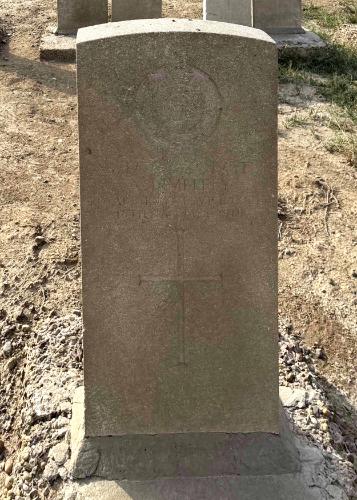
In memory of Private Alfred Dimbleby, S4/173635, 10th Field Bakery, Royal Army Service Corps who died on 16 January 1919. Remembered with honour, Baghdad (North Gate) War Cemetery

More information about Alfred can be found on a page dedicated to his memory on our website.

https://www.southlincolnshirewarmemorials.org.uk/…/alf…/

The photographs of Baghdad North Gate War Cemetery are Courtesy of the War Graves Photographic Project. Not all of the graves in this cemetery are in great condition and thankfully Alfred’s has survived even though it is not in the best of condition.

18th April 1918

Thursday 18th April 1918

Horbling

Today we learn of the sad death of Captain Allison Gould Smith of Horbling who died today serving his country with the 7th Battalion Loyal North Lancashire Regiment.

He will be missed by all in the village, his sacrifice will not be forgotten. Our condolences have been sent to George and Helen Smith, his paremts, on this sad occasion.

17th April 1918

Wednesday 17th April 1918

Bourne

Today we learn of the sad death of Pte Harold Leonard Joyce of Bourne who died of wounds today serving his country with the 2/5th Battalion, Lincolnshire Regiment.

He will be missed by all in the village, his sacrifice will not be forgotten. We pass on our condolences to his parents Mr & Mrs Fred Joyce of Bedehouse Bank.