by James | Sep 26, 2015 | Remembrance
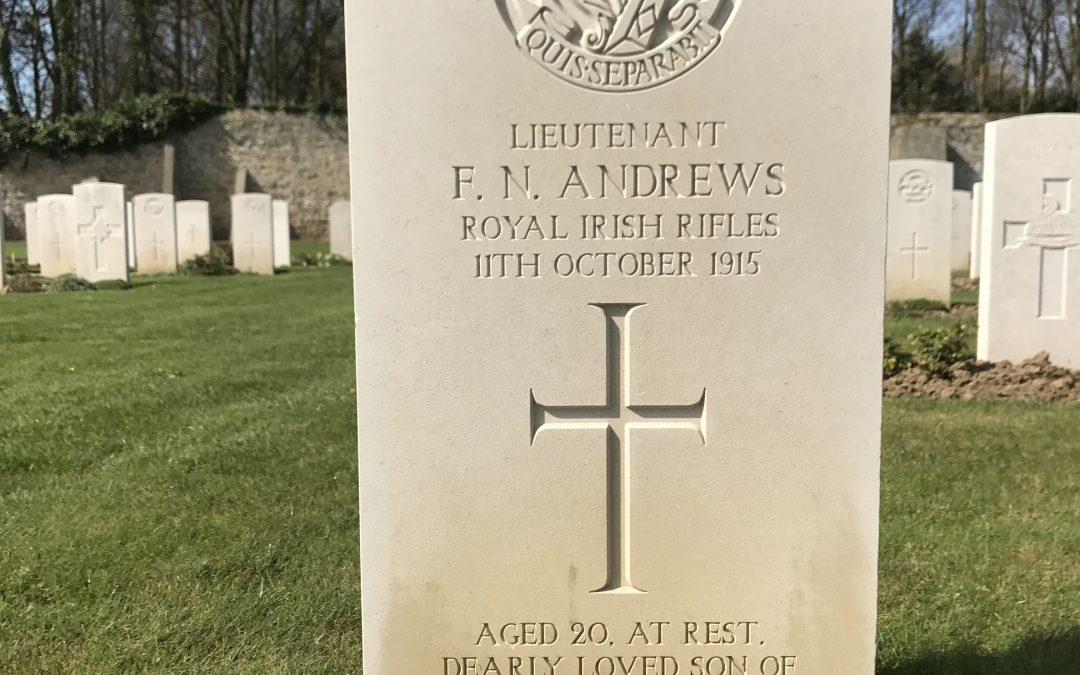
Today, 26th September, we have been remembering Joseph Parker Taylor who died this day in 1915.
Joseph was born in Morton in 1896 to Joseph and Emma Taylor and was one of 8 children of which only 6 had survived by 1911.
Joseph’s Mother, Emma Taylor, died in 1910 and by 1911 Joseph was working as a 2nd Wagoner on a farm and living with farm foreman, Arthur Cook.
Enlisting in the Army, Joseph joined the 7th Battalion Lincolnshire regiment who were shipped to France in July 1915.
By mid August the battalion had first seen action in the heavy fighting in the trenches East of Ypres and from there had been moved to an area with sporadic heavy fighting being the front line near to Voormezeele.
This sector saw heavy casualties in September 1915 and on the 25th September the battalion were to be included in a large action where several bluffs were made as to which sector was the main attack. They remained in trenches until the end of September suffering heavy losses from enemy sniper and trench mortar action.
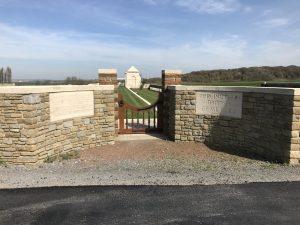
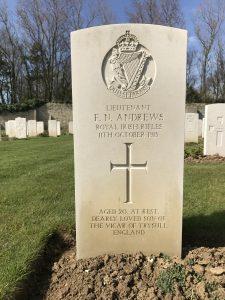
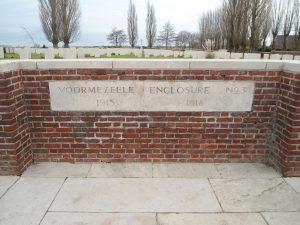
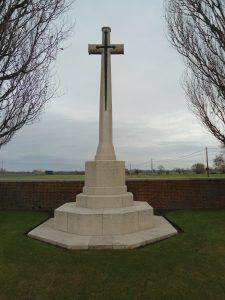
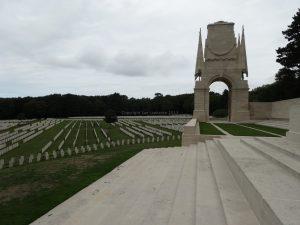
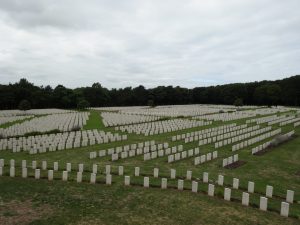
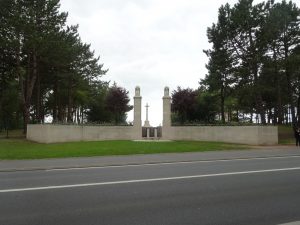
Joseph Parker Taylor was killed on the 26th September 1915 and is buried in the Voormezeele Cemetery in Belgium.
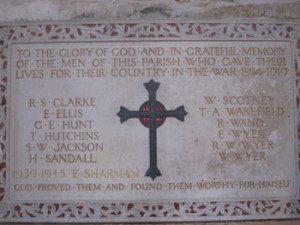
Joseph is also remembered on the Morton memorial.
by James | Mar 29, 2015 | Biography
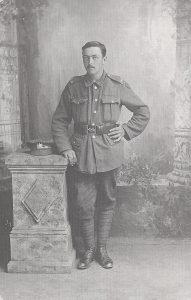
Harold Hanford was born in Morton, Lincolnshire in c 1899.
His birth was registered in Bourne in the March quarter of 1899 indicating a birth between January and March of that year.
Family History
Harold was the eighth child of James Hanford a Journeyman Butcher from Morton and his wife Elizabeth Ann Pikett (Also know as Elizabeth A Foster of Billingborough).
Harold’s father, James, was born in Morton c1866. He married Elizabeth Ann Pickett in 1889, she was born in Spilsby c1868. This marriage was registered in the Bourne District but it is likely that this could have taken place in Billingborough.
The children of James and Elizabeth Ann are:
Charlotte Elizabeth c1886
Agnora c1890,
Frances c1892,
James Fisher c1893 (WW1; Lance-Corporal Lincolnshire Regiment)
Alfred Sydney c1894 (WW1; Leicestershire Regiment)
John Foster c1896 (WW1; Driver)
May c 1898
Harold 1899 (WW1; 2nd Bn Lincolnshire Regiment)
Jesse 1901
Eric 1903
Gwendolen Pickett Hanford 1903
Violet Ann c 1905
Georgina Mary c 1907
Dora c 1908
Frank c 1911
Charles Ernie c1912
Harold Hanford
On the 1911 census Harold Hanford was a boarder in the Sandall Household in Morton. Herbert Sandall was a horseman on a farm along with Harold’s brother Fisher. Along with younger brother Eric the three boys were boarders with the Sandall family.
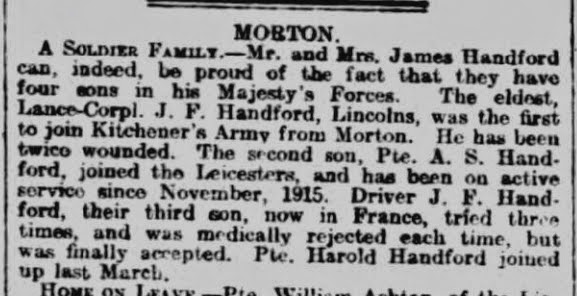
Harold is next mentioned in a clipping from the Grantham Journal from 21st July 1917 where his family is mentioned within the Morton correspondence because his parents had four sons all serving with the Army.
The Soldiers Died in the Great War records show Harold’s place of residence as Bourne Lincolnshire.
Other comments on the CWGC records show that Harold was the Son of James and Elizabeth Hanford, Morton, Bourne, Lincolnshire.
The final piece of information about Harold was found in the Grantham Journal of 5th July 1919. This mentioned that Harold’s parents had now received official confirmation that Harold was now officially presumed killed having been listed as missing on 22nd March 1918.
Military History
Harold’s war office records are yet to be uncovered and may be part of the records that were destroyed by fire in the Blitz.
The Medal Rolls do not show a Harold or H Hanford in the Lincolnshire Regiment and so more research will need to be done on this point.
From the Commonwealth War Graves Commission we know that Harold was serving in the 2nd Battalion, The Lincolnshire Regiment, when he was killed on 21st March 1918. This was the day of the Great German Offensive (First Battles of the Somme 1918) which saw the enemy attack across a 54 mile wide line using many more divisions than the allied army.
From the history of the Lincolnshire Regiment we can piece together the following information.
February 1918 saw a great change in the way Divisions and brigades were formed. This saw both the 1stand 2nd Battalions of the Lincolnshire Regiment both being attached to 62nd Brigade (21st Division) on February 3rd 1918. It was very unusual to see two Battalions of the same regiment fighting together.
On the night of the 20th March the 21st Division was holding part of the line east of Epehy and at the southern point of the Flesquieres Salient. The 1st and 2nd Lincolnshires were holding a section of this line near to the Canal Du Nord, just north of Peronne.
Shortly before 5am the enemy opened with an intense bombardment of gas, high explosive shells and trench mortars against the whole British line. Roads behind the line as well as the front line and support trenches were continually bombarded for four hours.
At 9:45am the German Army advanced through the thick fog which hung over the lines. The outpost line was overwhelmed by the enemy before it had chance to put up a fight. The main lines had expended their machine gun ammunition during the early morning fog and fought bravely against advancing enemy mounted units. Battalion headquarters was overrun during the day and fought its way up Chapel Hill. Parts of the 2nd Lincolnshire’s defended Chapel Hill, towards the rear of the front line along with 2 tanks.
The main line held during the day, although at times this was precarious and at some times critical.
The Lincolnshire Battalions were eventually relieved by the South African Scottish by 8am on the 22nd of March and moved safely back to the Pioneer Camp at Heudicourt.
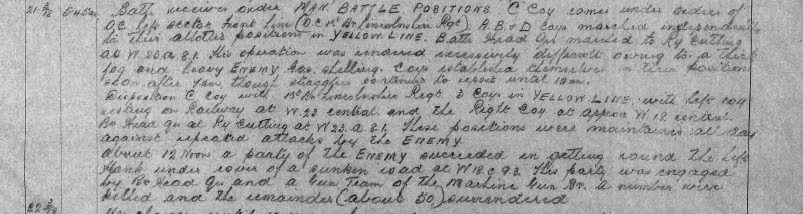
From the battalion diaries of the 2nd battalion Lincolnshire regiment we find the following entry for 21st March 1918;
Batt received order MAN BATTLE POSITIONS ‘C’ Coy comes under the orders of O.C left sector front line (OC 1st Bn Lincolnshire Regiment). A B & D Coys marched independently to their allotted positions in YELLOW LINE. Bttn Head Qtrs marched to railway cutting at W23.a.8.1. This operation was rendered excessively difficult owing to a thick fog and heavy ENEMY gas shelling. Coys established themselves in their positions soon after 7am though stragglers continued to report until 10am.
Distribution C Coy with 1st Bn Lincolnshire Regiment. 3 Coys in YELLOW LINE with left Coy resting on railway at W23 central with the right Coy at approximately W18 central. Bttn Head Qtrs at railway cutting at W23.a.8.1, these positions were maintained all day against repeated attacks by the ENEMY.
About 12 noon a party of the ENEMY succeeded in getting round the left flank under cover of a sunken road at W18.c.9.3 This party was engaged by Bn Head Qtrs and a gun team of the Machine Gun Bn, a number were killed and the remainder (about 50) surrendered.
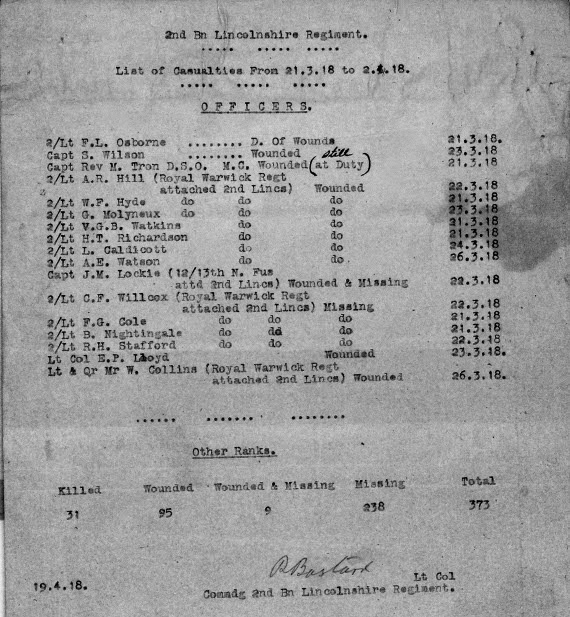
Harold Hanford was originally reported missing and later presumed as died during action on 21st March 1918.
Memorial
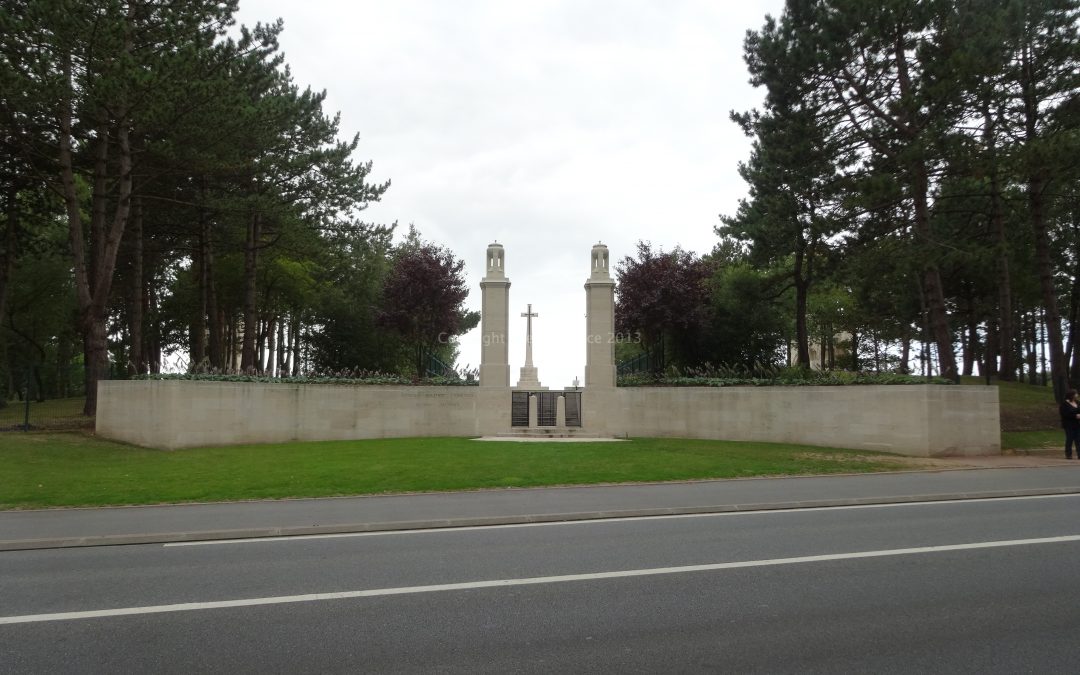
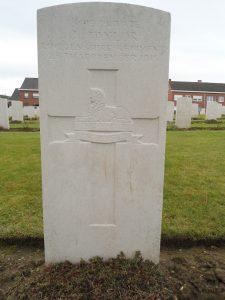
Private Harold Hanford 49402, 2nd Battalion, The Lincolnshire Regiment, is remembered with honour at Le Cateau Military Cemetery in the village of Le Cateau-Cambresis, 17km south east of Cambrai.
Grave Ref: I. B. 7.
by James | Jan 2, 2015 | Biography
Birth
Name:
Richard Christian
Date of birth:
1884
Date of Birth registration:
Oct-Dec 1884
Place of Birth Registration:
Bourne, Lincolnshire, England
Occupation: Thrashing Machine Driver, Horseman on Farm
Marriage
Wife’s Name:
Kate Maples
Date of Marriage:
Oct-Dec 1913
Place of Marriage:
Bourne District
Wife’s Date of birth:
1889
Wife’s Place of Birth:
Billiingborough
Wife’s father:
Edward Maples
Wife’s Mother:
Elizabeth Francis
Children, (Name), (DOB), (POB):
Harold Christian, Apr-Jun 1914, Bourne District
Ida M Christian, Apr-Jun 1915, Bourne District
Phyllis M Christian, Jan-Mar 1917 Bourne District
Kate Christian, Oct-Dec 1918 Bourne District
Family
Father’s Name:
Robert Christian
Father’s DOB:
1850
Father’s Place of Birth:
Kirkby Underwood, Lincolnshire, England
Father’s Occupation:
Bricklayer
Mother’s Name:
Elizabeth Marshall
Mother’s DOB:
1852
Mothers POB:
Kirkby Underwood, Lincolnshire, England
Mother’s Occupation:
Their Marriage:
1874 Bourne District
Siblings: (Name), (DOB), (POB)
Lucy Christian, 1874, Kirkby Underwood
Sarah Christian, 1877, Kirkby Underwood
Arthur Christian, 1880, Kirkby Underwood
Fred Christian, 1881, Kirkby Underwood
Lizzie Christian, 1883, Kirkby Underwood
Richard Christian, 1884, Kirkby Underwood
Ernest Christian, 1889, Kirkby Underwood
Charles Christian, 1891, Kirkby Underwood
Ethel Ann Christian, 1893, Kirkby Underwood
Harold Christian, 1895, Kirkby Underwood
1891 Census:
Richard is living with his parents in Kirkby Underwood
1901 Census:
Richard is living in Swinstead with Rudkin Family as a Boarder. The census gives him an age of 16 and he is listed as an agricultural horseman on farm.
1911 Census
Richard is living with his mother in Kirkby Underwood.
Richard died in England on the 22nd November 1918, 11 days after the end of the war. Rather than an act of war Richard was the victim of a family tragedy. On the 19th November Richard and Kate became parents for the 4th time when baby Kate was born. Only 3 days later both Richard and his wife Kate died within hours of each other of acute influenza (Spanish Flu being rife at the time) and baby Kate eventually died on the 29th November.
Relatives in services:
Newspaper Mentions
Grantham Journal Saturday 22nd November 1919
Kirkby Underwood
War Memorial Unveiled and Dedicated – Sunday last will live in the memory of all the parishioners and many interested in this little village. The Church services commenced with a celebration of the Holy Eucharist at 8 a.m., followed by matins and sermon at 11 a.m. The special service was at three o’clock and every seat in the church was occupied. Prayers suitable for the occasion were offered by the rector, Rev J.S. Barstow, the special lesson being read by Mr. Wm. Dyson of Bulby Hall, who proceeded after the singing of the hymn, “Stand Up, Stand Up for Jesus” to unveil the beautiful stained glass window, which during the week had been fixed in the east end of the Church. It was then solemnly dedicated by the Rev. Canon Layng – To the Glory of God, and in grateful memory of Bertie Evelyn Rudkin, Ernest Henry Rudkin, Richard Christian and John Thomas Wyer, and as a thankoffering for peace and victory. Mr. Dyson standing on the chancel steps then spoke a few words, which appealed to his hearers. Referring to the long connection of his family with the Church and district, and to the happy days spent in the neighbourhood, he expressed the regret felt by all of them at the coming severance, but trusted that the Church would continue to progress, and believed that the rector, who had served in the late war, was particularly fitted to help and sympathise with his people I their joys and sorrow . The window he regarded as the most beautiful war memorial and he was highly pleased with it. A few well-chosen, comforting words were addressed to the parents and relatives of the fallen, reference being made to the powers given to the laity by the Enabling Bill, and all were urged to work for the Church, rather than for this or that particular incumbent; and lastly referring to the present industrial unrest, he expressed his confidence that the good sense and judgment of the people would prevail and all classes work together for the general good. The Hymn, “For All The Saints” was feelingly sung, and the memorable service concluded by the “Last Post” sounded by Sergt. Pattinson of Bourne. In the evening, a memorial service was held in the honour of the fallen. The Rector took as his text the words inscribed on the window, “I am the Resurrection and the Life.” He clearly explained the idea underlying the window, and connecting the various figures on it, and its special appropriateness to the Church and as a memorial.. A Glowing tribute was paid to the courage and unselfishness of those who had given their lives that we may live, and for King and Country, and words of sympathy and hope addressed particularly to the mourners present, as one who was a mourner himself a mourner. The Late Rector, the Rev. W.H. Langworthy (The present rector of Claypole) organized the idea of the window as a war memorial, and worked hard for its accomplishment, but was unable to be present at the dedication.
Military Records
Attestation Papers:
Available for 1902 for the Lincolnshire Regiment
WW1 Soldier’s Records:
Soldier’s Died In The Great War:
Not found
Pension Records:
Not yet available
Medals
Medal Card Index:
Richard’s medal card index states that he was eligible for the following medals:-
The British Medal
The Victory Medal
Memorials
UK:
Kirkby Underwood, plaque in St Mary and All Saints Church
Kirkby Underwood, Names on the stained glass window in St Mary and All Saints Church
Commonwealth War Graves Commission:
In Memory of Private R Christian, 61814, Durham Light Infantry who died on 22 November 1918 Age 34
Son of Elizabeth Christian, of Kirkby Underwood, Lincs and the late Robert Christian; husband of the late Kate Christian
Remembered with Honour, Billingborough (St Andrews) Churchyard
More information:
Military Service Timeline
Richard attested to the militia of the 4th Lincolnshire Regiment on the 22nd May 1902 and was living in Billingborough.
Richard drilled with the 4th Battalion Lincolnshire regiment until April 1908 when he was discharged when the Territorial and Reserve Forces act disbanded the volunteer and militia units and placed the men on regular army reserve.
Richard joined the Durham Light Infantry (61814) during the war although the date is not known.
He was later transferred to the 409th Company of the labour Corps with a change of regimental number to 19310. The 409th company was known as the Kesteven and Lindsay company which was based at Lincoln. The labour Corps traditionally took men who were wounded and then classed as less than A1 fitness and this would indicate that Richard was either wounded or, at the age of 34 not fit for front line service.
Men of the labour corps were traditionally commemorated by the CWGC under their original regiment and number.
Richard died in England on the 22nd November 1918, 11 days after the end of the war. Rather than an act of war Richard was the victim of a family tragedy. On the 19th November Richard and Kate became parents for the 4th time when baby Kate was born. Only 3 days later both Richard and his wife Kate died within hours of each other of acute influenza (Spanish Flu being rife at the time) and baby Kate eventually died on the 29th November.
Recent Comments