Biography of Tom Hutchins (13476)
6th Battalion Lincolnshire Regiment
Died 7th August 1915
Soldier
- Name: Tom Hutchins
- Date of birth: 1890
- Place of Birth: Haconby, Lincolnshire, England
- Date of Birth registration: July – September 1890
- Place of Birth Registration: Bourne, Lincolnshire, England
Father
- Name: Thomas William Hutchins
- DOB: 1859
- Place of Birth: Rippingale, Lincolnshire, England
- Occupation: Bricklayer
Mother
- Name: Sophia Ellis
- DOB: 1859
- Place Of Birth: Haconby, Lincolnshire, England
- Marriage: 1889 Bourne District
Siblings: (Name), (DOB), (POB)
- Tom Hutchins, 1890, Haconby
- Annie Huchins, 1893, Haconby
- Clara Elizabeth Hutchins, 1896, Haconby
- Ellis Hutchins, 1897, Haconby
Census
- 1901: Tom is living in the house of Great Uncle Thomas Bland along with his parents in Haconby, Lincolnshire.
- 1911: Tom is living with Hall Family as a Lodger in Haconby Fen, Haconby, Lincolnshire. The census gives him an age of 20 and he is listed as a horseman on farm.
- 1921: Tom’s parents were living in Haconby, Lincolnshire
Relatives in services
- Tom’s cousins Robert Wand and Edward Ellis also fought and was killed in WW1. Robert and Edward can be found on our page dedicated to the Haconby War Memorial.
Marriage
- No marriage for Tom has been found and because of his age we can assume that he never had the opportunity to marry.
Newspaper Mentions
- Lincolnshire, Boston and Spalding Free Press 14th September 1915
DARDANELLES HEAVY TOLL
Eight Bourne Soldiers in Recent Casualty ListPTE. BLOODWORTH THE ONLY ONE TO ESCAPE INJURYSIX RURAL MEN KILLED OR WOUNDED
LETTERS TELL A TERRIBLE TALE
Several Bourne families have been in a state of great anxiety during the past week or so concerning their relatives who have experienced fierce fighting in the Dardanelles. It is a terrible ordeal, and it would seem that the 6th Lincolns were in the Suvla and the fight for Hill 70. Some of the casualties we have published in a previous issue, but during the past week we have been able to glean further particulars as to how the local men fell, and appended are letters giving vivid descriptions of the furious battle. The intensity of the fighting is evidenced by the casualty lists, and in a few days the following Bourne men were put out of action, viz.:—Bourne Casualty ListName, Rank, Regiment, StatusA. A. Kingsford Sergeant Welsh Regiment Killed in ActionP. Cleary Signaller 6th Lincolnshire Regiment Killed in ActionHarry Darner Private 6th Lincolnshire Regiment WoundedJack Baldock Private 6th Lincolnshire Regiment WoundedE. Robinson Private 6th Lincolnshire Regiment WoundedVickers Lance-Corporal 6th Lincolnshire Regiment WoundedFred Savage Private 6th Lincolnshire Regiment WoundedFrank Baldock Private 6th Lincolnshire Regiment Wounded
With the exception of Sergt. Kingsford, all the above-named joined Kitchener’s Army at the beginning of the war; they went to Belton Park, to hospital at Alexandria; the Baldocks are brothers (sons of Mr. Baldock, South-street, Bourne), and Pte. Robinson was in hospital, but at the time of writing it was not known where Frank was; and Vickers is also shown to be in hospital. Corporal H. Bloodworth (a son of the Bourne Gasworks manager) was the only Bourne man to escape, and by letters from him the unfortunate news was imparted.
We have also heard during the week of several soldiers belonging to villages near Bourne, having been in the thick of the fight in the Dardanelles, with the following result:—
Rural Villages Casualty ListTom Hutchins, Private 6th Lincolnshire Regiment, Haconby, Killed in ActionS. Turner, Private 6th Lincolnshire Regiment, Baston, Killed in ActionWalter Archer, Private, 6th Lincolnshire Regiment, Toft, WoundedC. Walpole,Private 6th Lincolnshire Regiment, Elsthorpe, WoundedWarner, Driver, Royal Field Artillery (R.F.A.), Witham-on-the-Hill, WoundedAlf. Chessum, Private 6th Lincolnshire Regiment, Pointon, Wounded
Practically all the above-named belonged to the Lincoln Regt. Before enlistment Pte. Chessum was in the service of Mr. Birch-Reynardson, J.P., of Holywell Hall, and while in training at Belton Park acted as servant to one of the officers. Mr. and Mrs. Chessum, of Pointon, have two other sons in the Army. Pte. Turner, the Baston hero, of only 20 summers, had, it is stated, only been in the firing line about a day.
MEMORIAL SERVICE AT HACONBY
By the death of Pte. Hutchins, Haconby mourns the loss of the first of her sons who have fallen in battle. Hutchins was a chorister in Haconby Church, and a memorial service was held on Sunday afternoon week, impressively conducted by the Vicar (Rev. J. H. Boldero). The service consisted of the Litany and the Burial Service. The beautiful little church—one of the sentinels of the Fens—was filled to its utmost seating capacity, the people assembling to pay tribute to one who had died for them. Mr. J. W. Palmer, the organist, in an able manner played appropriate music, including “O Rest in the Lord.”A number of Bourne soldiers have recently been drafted to the Dardanelles, including—Pte. W. Hobbs (who has been twice wounded, and seen active service in France), Pte. F. Hinson, and Pte. F. Fisher.
TURKS BAYONET OUR WOUNDED.—HOW SIGNALLER CLEARY DIED.
Corpl. Bloodworth, writing to his parents, says:—“Just a line to let you know that I am alive and well (dated August 16th), but we have been through it lately. Poor Vic, Jack and Signaller (or Bluey) Jack was bayonetted at the point of the bayonet, after advancing under a hail of lead for 3/4 miles. We lost over 250 men, but they was not as bad as when we attacked a hill previously. Our Bourne boys were in the firing line at the time, and it was terrible. How I escaped, god knows, but I did, only getting a bullet through my haversack. Cleary got killed, the Turks bayonetted him after he was wounded—the swines! Jack Baldock, Frank Baldock, Fred Savage, and Harry Darner were all wounded, but I have heard nothing at all of Robinson. Our battalion was awfully smashed up. All my section but one are gone.”
Wounded Burnt in a Wood
The letter proceeded:— “To make matters worse the whole village took fire, and burnt a lot of our wounded, despite the fact that we did all we could to rescue them. We also lost our good old Captain Brown, also one young lieutenant, nearly all our seargents, and there was only myself, three corporals, and three men left in our Company, so you can guess what sort of hell on earth we were in. Every man acted like a hero, or is killed or wounded, so I think I must have been born under a lucky star. The poor old Lincolns suffered much, but they fought bravely and well.”
Killed a Turk
“I saw a Turk running over a field, but I had something that stopped him, catching him the first shot. I don’t want you to worry about me, as I feel sure that we shall come back a bit like that again, and I feel sure that my luck is in. Just now we are at a little place by the cliffs of the sea, and quite safe from the bullets, so I am enjoying it watching our Navy bombarding the Turks’ positions. I wish they would send some more Lincolns here, but the Navy doesn’t do amiss.”Corpl. Bloodworth concludes that he has to go the next day.
Writing on August 20th, Corpl. Bloodworth says:—
“I am still in the land of the living, and am A1. We are in the trenches again, but not in the firing line. It is quite all right and safe, but for a few shells, but we do get time short, and is all there when used to it. I do not know anything more about our wounded boys. I get a bit of training, and is very nice. I think we have got another stripe now, so am a full corporal, and am graduated, but not officially. The Turks have just shown the white flag. I don’t know what they are after, so they have done this sort of thing before.”
A Bourne Soldier Recommended for the D.C.M.
The last letter received from Corpl. Bloodworth was dated August 20th, and contained the following notes of interest:—“I am still A1, and now writing in the trenches. We are having some busy days in the reserve. We got it pretty hot while we were in the firing line from snipers. If we give them half a chance, it means instant death. They always aim for the head, and they are dead shots. When we were in support, we were out at night trench digging, very often under fire, but we came through all right. I have had a few close shaves from shrapnel and snipers, but they haven’t got me yet, and I shall take care they don’t if I can help it. The boys from Bourne are all out here, and are quite well. I expect you will hear from some of them before long. The weather out here is very hot, and when we are marching to and from the trenches, it makes the sweat run, not half. I expect things at Bourne are a bit quiet now, most of the young men have enlisted. But wait while we come home! Tell the people in Bourne to ‘keep the pot boiling’ and keep smiling.”
The above-named soldier has since been wounded, also the Bourne “boys” out there, as recorded above.
Military Records
Attestation Papers
- None found
- These records show that Private Tom Hutchins, 13476, 6th Battalion Lincolnshire Regiment was killed in action on 7th August 1915 in the Balkan Theatre.
Pension Records
- Available
Effects Left Too
- Father Thomas William
Medals
- The British Medal
- The Victory Medal
- The 15 Star
Memorials
- UK:
- Haconby, plaque in St Andrew’s Church
- Commonwealth War Graves Commission:
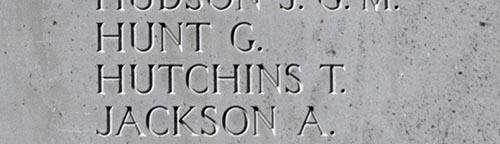
- In Memory of Private Tom Hutchins, 13476, 6th Battalion Lincolnshire Regiment who died on 7 August 1915.
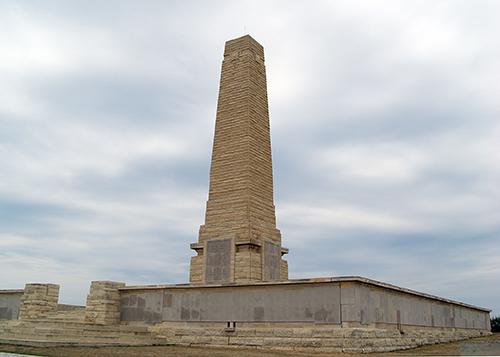
- Remembered with Honour Helles Memorial
- Panel Ref: 44 to 46
© The War Graves Photographic Project
© The War Graves Photographic Project
Military Service Timeline:
-
Tom was born in Haconby Lincolnshire in 1890, the son of Thomas William Hutchins, a bricklayer b.1859 in Rippingale and his wife Sophia Ellis b.1860 in Haconby. The couple were married in 1889, the marriage being registered in the Bourne District.
They would settle in Haconby where all of their four children would be born.
Tom Hutchins, 1890, HaconbyAnnie Huchins, 1893, HaconbyClara Elizabeth Hutchins, 1896, HaconbyEllis Hutchins, 1897, Haconby
We look at the census returns to look into Tom’s early life:-
1901: The census shows us that Tom is living in the house of Great Uncle Thomas Bland along with his parents in Haconby. Thomas Bland was had a blacksmmith’s shop and Thomas Hutchins (Tom’s father) was working as a bricklayer.1911: Tom is living in Haconby Fen with Hall Family as a Lodger. The census gives him an age of 20 and he is listed as a horseman on farm, the head of the house David hall and another lodger John Clapton were also all Horsemen on farms.
Tom’s service records no longer exist and were most likely destroyed in the London Blitz when the building they were stored in caught fire.
From Tom’s war gratuity payment we see that his family was paid the minimum payment of £3/- for service up to one year.
We look at his service number that was assigned to him as one of the Lincoln’s Territorial Battalions and this shows us that Tom enlisted in November 1914. He joined the newly formed 6th Battalion.
The battalion Diaries for the time before their posting to the Western Front have been lost and further information can be found in the History of the 6th battalion written by Colonel F G Spring.The 6th was formed in Lincoln in August 1914 as part of the first of Kitchener’s new Armies. They would join the 33rd Brigade of the 11th Northern Division and were trained at Belton Park near Grantham. In March 1915, by which time Tom Hutchins was with them, they moved to Salisbury Plain marching via Grantham, Melton Mowbray and on to Thurmaston and Lutterworth where they entrained for Franham. The battalion was stationed at Frensham where they received advanced training.On the 30th June 1915 the Battalion entrained at Frensham and proceeded to Liverpool for service with the Mediterranean Expeditionary Force.They embarked in Liverpool on the first of July on to the ship Empress of Britain and when passing the straits of Gibraltar Khaki uniform was issued. They would stop off in Malta for Coal before arriving on the 12th July in Alexandria. each day the men were exercised with a march and eventually they would embark again on the 16th July for Mudros harbour on the island of Lemnos.
The Battalion was to embark on small river steamers and then onto trawlers to be landed on the ship River Clyde which had played a part in the original landings near Caper Hellas but now was stranded on the beach at Sedd el Bahr. Two days later the Battalion moved into the front line near Achi Bara. After a week in the line with trenches in poor condition and with almost constant sniper fire into the uncompleted trenches, the Battalion came out of the line. It would return after two days but was then relieved and pulled out of the line and embarked for Imbros to join two other brigades of the Division.
They were told that the whole would be take part in the landings at Suvla Bay just north of the are held by Australian and New Zealand troops which were planned for the 6th August.We take the following passage from the ‘History of the 6th Battalion Lincolnshire Regiment’ by Colonel F.G. Spring, which tells the story of that landing much better than your author can. I would recommend this as excellent reading.On the afternoon of August 6th the Battalion embarked on a destroyer, the other Battalions of the Brigade embarking on destroyers and lighters, and as it grew dark we set forth to take part in the heaviest fighting the Battalion has ever experienced.The 33rd Infantry Brigade landed on ‘B’ beach, a mile and a half South East of Nibrunesi Point at 11.30 p.m. Beyond a few shots from Turkish snipers, who quickly withdrew, no opposition was encountered. The 7th South Staffords, the 9th Sherwood Foresters landed first, followed by Brigade Headquarters, and then our own Battalion and the 6th Border Regiment. The 7th South Staffords, the 9th Sherwood Foresters took up a line from the South East corner of the Salt Lake, and came under the orders of Divisional Headquarters, whilst the remainder of the Brigade, with the 6th East Yorkshire Regiment (Pioneers) were in Divisional Reserve. Our orders were to be at the junction of the Azmak Ravine with the Anafarta Sagir – Suvla Point road at dawn. The 34th Infantry Brigade was to land on the Northern shores of Suvla Bay, obtain possession of the high ridge of Karakul Dagh, and established themselves on Chocolate Hill by dawn. The 32nd Infantry Brigade had the beach South of Suvla Bay, opposite the Salt Lake, secure Lala Baba, a hill between the Salt Lake and the sea shore, and then follow the 34th Infantry Brigade.
We followed the 32nd Infantry Brigade, skirting the eastern slopes, which had been taken by the 6th Yorkshire Regiment. The Salt Lake on our right at the time was dry, was about two square miles in extent, and was separated from the sea by a narrow strip of land along which we were now proceeding in a Northerly direction. Above this strip of land a small inlet, also dry, connected the Salt Lake with the sea. When halfway along the strip of land towards the inlet, fighting could be seen taking place on the far side of the latter. The day was breaking, and the Battalion, which, with Brigade H.Q., was leading, began to come under rifle fire from Turks on the Northern shores of the Salt Lake.
The men, who, owing to the bad-going over the rocky ground, were extended a long way back, were ordered to dig in. Then the Turks began shelling fairly heavily with guns on the ridge north of Suvla Bay. Casualties would have been heavy but for the soft bed of the Salt Lake partially smothering the burst of the shells.
During the morning the 10th Division was seen landing West of Lala Baba, and passing over the inlet north of the Salt Lake.
At 2 a.m. the following afternoon – August 7th – orders were received that we were to advance in support of the 31st Infantry Brigade (10th Division) who were attacking Chocolate Hill. We were to be supported by the 6th Border Regiment.
‘C’ and ‘D’ Companies started off immediately in artillery formation, supported by ‘A’ and ‘B’ Companies, and passed along the northern shore of the Salt Lake. Shortly afterwards, orders were received that the 10th Infantry Brigade having failed, the Battalion, supported by the 6th Border Regiment, was to take Chocolate Hill.
The advance continued in extended order, under heavy shrapnel fire but the men went on without flinching, as steadily and as regularly as if they were carrying out a field day. Two hundred yards from the foot of the hill, and seven hundred yards from the summit, the Battalion came across the Royal Dublin Fusiliers, 10th Division, and halted under cover. ‘D’ and ‘B’ Companies advanced through the Dublin Fusiliers by short rushes. Major Norton was hit at this time, and Captain Duck took over command of ‘D’ Company. Companies became more or less split up owing to casualties, the heavy fire which was being directed on them, and the small parties of Dublin Fusiliers scattered about under cover.
Companies were quickly re-organised and reformed, whilst ‘B’ and ‘D’ Companies prepared for the assault. Leaving the Dublin Fusiliers behind, the Battalion advanced in short rushes under heavy fire. One hundred yards from the crest, ‘B’ and ‘D’ Companies made a last halt of half an hour, whilst our artillery and machine guns played on the Turkish positions above.
Then the charge was ordered, and with a rush, our men carried the Turkish trenches on the top of the hill. Many Turks were bayoneted or shot whilst they were running away. A communication trench running down the reverse slope of the hill enabled a few Turks to get away but most of them were killed.
Captain Duck and Lieutenant Webber of ‘D’ Company were the first to cross the enemy trenches. Lieutenant Webber unfortunately was shot dead whilst crossing the trench, into which he fell. The positions were consolidated and prepared against enemy counter-attacks and whilst this work was
proceeding, the Royal Dublin Fusiliers came up.
The losses in the fight were five Officers and 164 Other Ranks. Major
Fraser and Lieutenant Webber were dead, Major Norton, Second Lieutenants Bird and Hemsley were wounded. So ended the first, and perhaps the finest attack ever carried out by the Battalion. After a whole brigade had attacked Chocolate Hill, and had failed, the Battalion, unaided, went straight at it and took the hill.
The 6th Border Regiment had co-operated on our left, and afterwards pushed out to the eastern slopes of the hill. During the night Chocolate Hill was taken over by the 31st Infantry Brigade and we went back in the early morning of August 7th to Divisional Reserve at Lala Baba. >>
Tom Hutchins had only been in action for just over two weeks when he died in the action described by Colonel Spring.
Sources
- WW1 Soldier’s Records (www.ancestry.co.uk)
- British Newspaper Archive.
- Fold 3
- Find My Past
- Genealogist
- Forces War Records
- British Army Service Numbers
- War Gratuity Calculator
- Commonwealth War Graves Commission
- National Archives – Battalion War Diaries
- General Registry Office
- The History Of The Lincolnshire Regiment – C.R.Simpson
Updated 8th August 2026